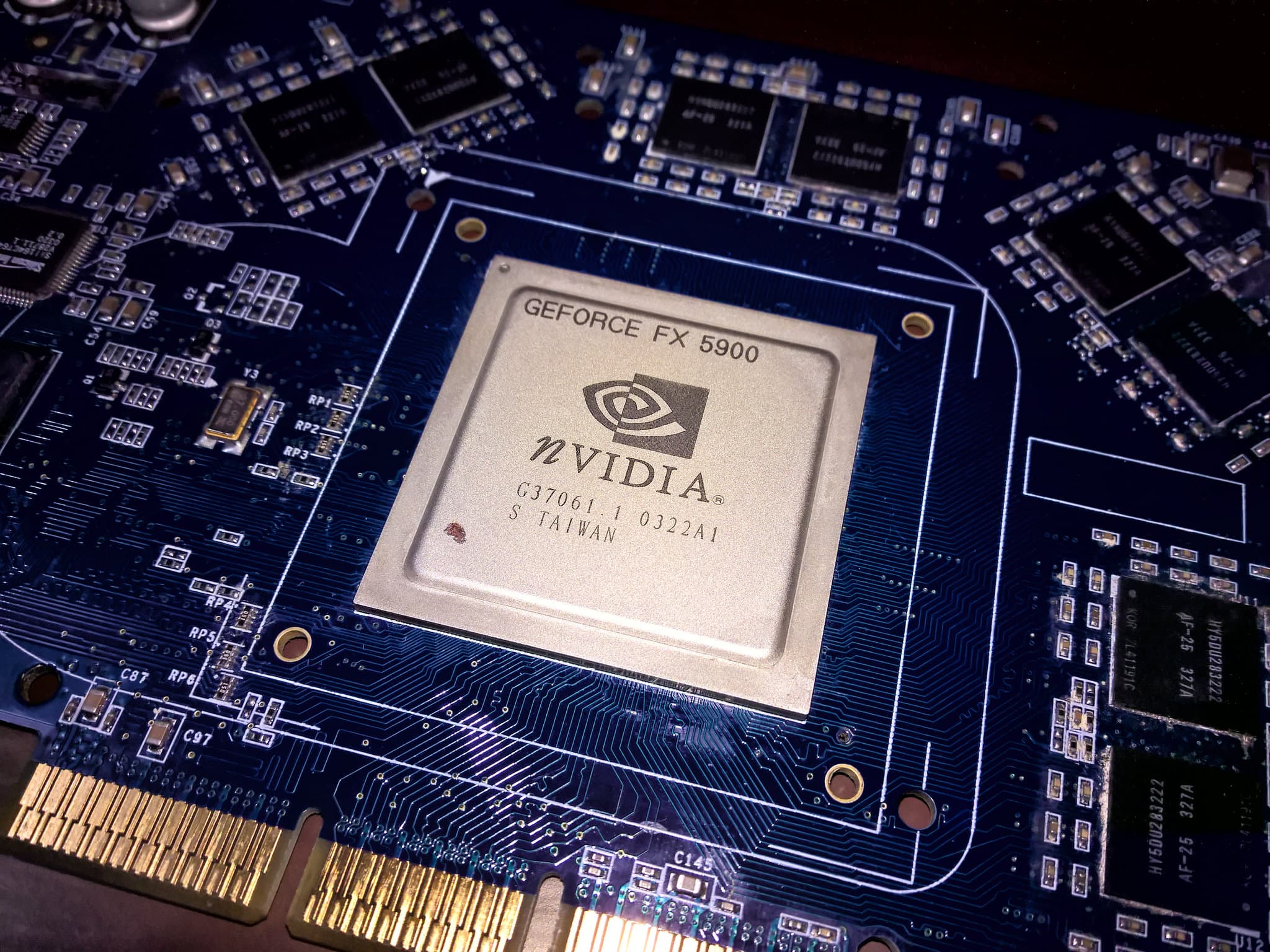
The market's current unease, evidenced by the S&P 500's 1.7% dip to $6,369 and the Nasdaq's 2.1% slide to $20,948 today, is prompting a crucial re-evaluation of high-growth sectors, particularly artificial intelligence. While Nvidia (NVDA) continues to dominate headlines, trading at $167.52 after a 2.2% decline, MarketWatch's recent analysis points to a growing conviction among investors seeking undervalued entry points into the burgeoning AI infrastructure. This shift suggests that the next wave of AI alpha may not come from the obvious leaders, but from the foundational "picks and shovels" companies that underpin the entire ecosystem. Sophisticated investors are now actively hunting for semiconductor firms that offer robust exposure to AI's long-term tailwinds without the premium valuations currently attached to the market darlings. This strategic pivot reflects a maturing AI investment landscape, where diversification beyond the immediate front-runners becomes paramount for sustained portfolio growth.
Today's broad market sell-off, with the Dow Jones shedding 1.7% to $45,167 and the Russell 2000 mirroring the decline at $2,450, underscores a palpable risk-off sentiment permeating equity markets. The tech sector, in particular, bore the brunt of the pressure, with giants like Meta (META) and Amazon (AMZN) both down a significant 4.0%, hitting $525.72 and $199.34 respectively. This widespread retreat, even as the Crypto Fear & Greed Index registers an "Extreme Fear" reading of 12, creates a fertile ground for identifying resilient plays that stand to benefit from secular growth trends like AI. Despite the immediate dip in bellwether AI stock NVDA, the underlying demand for AI processing power and specialized hardware remains insatiable, making a targeted search for undervalued chip makers a high-conviction strategy. Investors are clearly distinguishing between broad market sentiment and specific, defensible growth narratives.
This current market dynamic, characterized by a hunt for value within a high-growth sector, echoes patterns seen in previous technological revolutions where initial leaders paved the way for a broader ecosystem expansion. Historically, after an initial surge driven by a few dominant players, capital inevitably flows downstream to companies providing critical components, infrastructure, and specialized services at more attractive valuations. The sustained multi-year rally in AI, particularly since the 2023 explosion in generative AI applications, has seen Nvidia's valuation soar, leading to a natural search for firms positioned to capture the subsequent waves of enterprise and sovereign AI deployment. This isn't a retreat from AI; it's a strategic reallocation, recognizing that the foundational build-out of AI capabilities requires a vast array of specialized semiconductor solutions beyond just the headline-grabbing GPUs. The market is maturing, and so must investment strategies.
Wall Street analysts, particularly those covering the semiconductor space, are increasingly highlighting this divergence, with firms like Susquehanna and Needham & Company adjusting their coverage to identify these next-tier AI beneficiaries. While consensus still favors the established leaders for their sheer scale, a growing number of institutional investors are actively building positions in companies offering more specialized or niche AI hardware solutions. These firms, often with robust intellectual property in areas like custom ASICs, advanced packaging, or high-bandwidth memory interfaces, are seen as less susceptible to the cyclical swings of general-purpose computing. Fund managers are strategically diversifying their AI exposure, recognizing that the exponential growth in AI workloads demands a broader suite of hardware innovation, not just incremental improvements from a single vendor. This pivot is a clear signal that smart money is looking past the immediate hype for sustainable, long-term value creation.
The fundamental thesis behind these "cheaper" AI chip stocks centers on their critical, often overlooked, role in the complete AI supply chain. These are not merely alternative GPU manufacturers; rather, they are innovators in areas such as high-performance interconnects, specialized memory controllers, power management ICs, or custom neural processing units (NPUs) tailored for specific edge AI or data center applications. Their revenue drivers are often tied to design wins in emerging AI hardware platforms, ensuring long-term contracts and sticky customer relationships. While their individual market caps may be smaller than Nvidia's, their profit margins can be robust due to proprietary technology and a less commoditized product offering. For instance, companies specializing in silicon photonics for AI clusters or those developing next-generation packaging solutions are indispensable, yet often trade at significantly lower multiples than their more visible counterparts. This essential, foundational contribution ensures their relevance and growth potential as AI adoption accelerates across all industries.
The broader market implications of this shift are significant, signaling a potential sector rotation within the technology landscape. Instead of a broad-based tech rally driven by a handful of mega-caps, we are likely to witness more granular capital allocation, favoring specific sub-sectors within semiconductors that offer compelling risk-adjusted returns. This doesn't necessarily imply a full flight from risk, but rather a more discerning approach to growth, even as the Crypto Fear & Greed Index flashes "Extreme Fear." The continued build-out of sovereign AI capabilities, a strategic priority under President Trump's administration, will further fuel demand for a diverse range of chip technologies, benefiting companies beyond the immediate front-runners. Investors should recognize that while today's market dip impacts all equities, the underlying structural demand for AI hardware provides a powerful counter-narrative, driving capital towards these critical enablers.
Looking forward, the catalysts for these undervalued AI chip stocks are manifold and deeply embedded in the continued expansion of AI infrastructure. Upcoming earnings seasons will be crucial, with investors scrutinizing management guidance on design wins, order backlogs, and capital expenditure plans that signal robust demand for their specialized products. Technical levels for the broader Philadelphia Semiconductor Index (SOX) will be important to watch, but the real alpha will be generated by individual stock performance driven by specific product cycles and strategic partnerships. The next wave of AI innovation, particularly in areas like multimodal AI and quantum-enhanced AI, will demand increasingly sophisticated and specialized hardware, providing a long runway for growth for these foundational players. Furthermore, any strategic M&A activity in the semiconductor space, a perennial feature of the industry, could unlock significant value for these smaller, innovative firms.
The bottom line for sophisticated investors is clear: while Nvidia remains an undeniable force in AI, the smart money is recognizing that the next phase of AI investment requires a more nuanced approach. Today's market sell-off, with NVDA down to $167.52, presents an an opportunity to strategically pivot into these "cheaper" chip stocks that are quietly building the crucial infrastructure for the AI revolution. We maintain our high conviction that the long-term AI thesis is unequivocally intact, but the avenues for significant alpha generation are evolving beyond the most prominent names. Investors must look past the headline numbers and dive into the foundational components powering AI's future; that is where the real value and substantial returns will be found. This is not a speculative bet; it is a strategic repositioning for the sustained, multi-decade growth of artificial intelligence.