stating the Hamas armed wing finds disarmament calls unacceptable is not a mere geopolitical footnote but a critical development with immediate and profound macro implications. This firm stance escalates regional tensions, directly impacting energy markets, supply chains, and, consequently, global inflation expectations in an already fragile economic environment. The declaration underscores a deepening impasse in a critical geopolitical hotspot, raising the specter of prolonged conflict and persistent risk premiums embedded across all financial assets. Such intransigence from a major non-state actor fundamentally alters the risk calculus for institutional investors, demanding a swift reassessment of global growth forecasts and central bank policy trajectories.
While US markets were closed at the 21:00 UTC news release, the implications for Monday's open are unequivocally bearish for risk assets and inflationary for commodities. An immediate flight-to-quality bid is anticipated for US Treasuries, initially driving benchmark yields lower as capital seeks safety in sovereign debt. However, this relief could be short-lived if the news translates into an oil price spike, quickly pivoting market sentiment towards renewed inflationary concerns that push yields back up across the curve. The US Dollar Index will almost certainly strengthen as a safe-haven currency, while equity futures for the S&P 500 (closing today at $6,583) and Nasdaq (closing today at $21,879) are poised for downside pressure, reflecting increased risk aversion. Gold, a traditional hedge against geopolitical instability, will undoubtedly see substantial upward momentum.
This geopolitical development echoes historical periods where regional conflicts significantly impacted global financial stability and inflation, notably during the 1973 oil crisis or the Gulf Wars of the early 1990s and 2000s. In each instance, energy price shocks and supply chain disruptions fueled inflationary spirals, forcing central banks into aggressive tightening cycles that often preceded economic slowdowns. The current environment, already grappling with persistent core inflation and elevated public debt levels globally, renders such a geopolitical shock particularly potent, amplifying the risk of stagflationary outcomes far beyond what was observed in more benign macro backdrops. This event adds another layer of complexity to a global economy already struggling with post-pandemic supply constraints and a fragmented geopolitical landscape, making any path to soft landing considerably narrower.
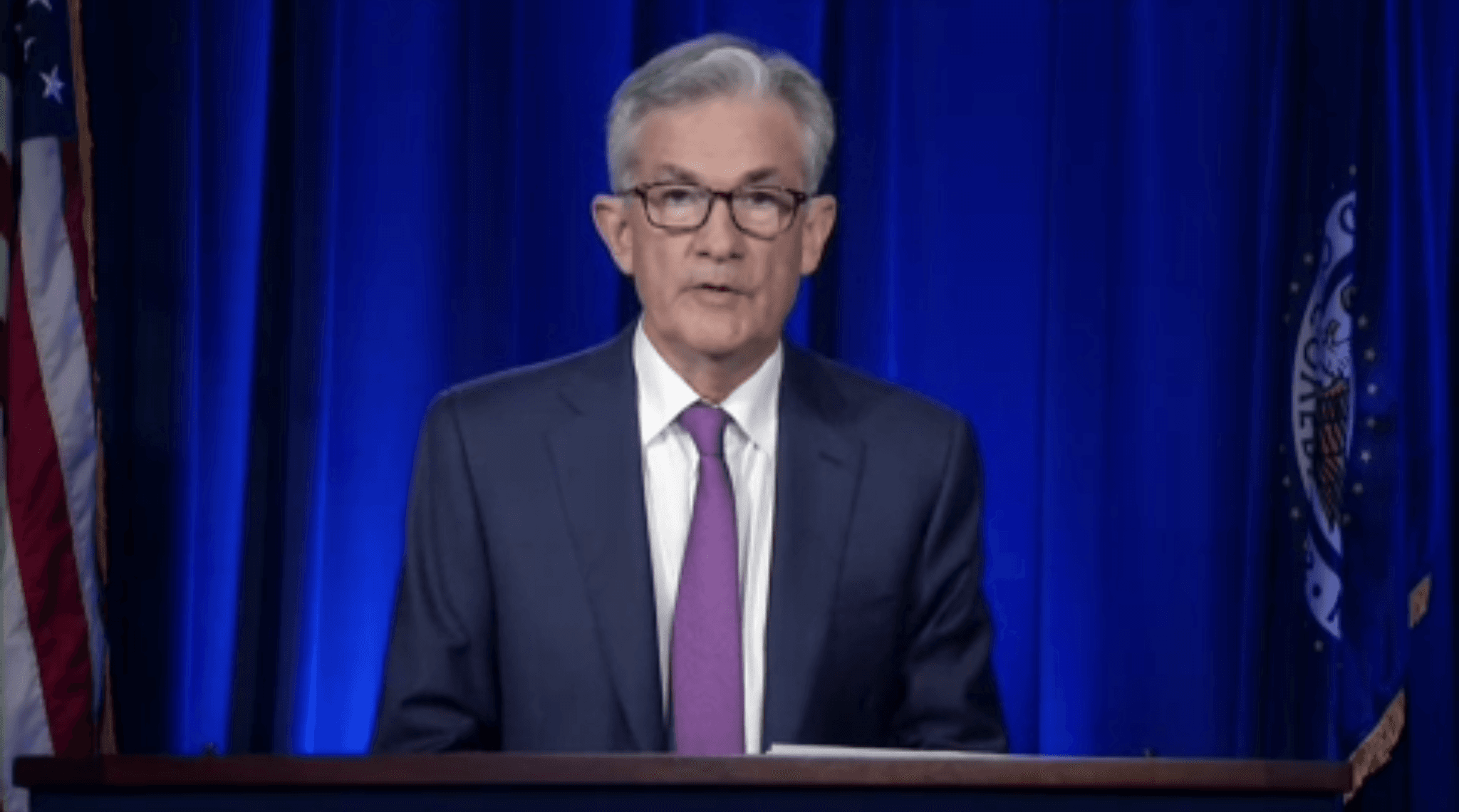
Federal Reserve Chair Jerome Powell, alongside his counterparts at the ECB and BOJ, now faces an even more challenging balancing act. The explicit rejection of disarmament by Hamas injects a significant inflationary impulse into the global economy, making the Fed's target of 2% inflation increasingly elusive and potentially delaying its achievement by quarters, if not longer. This development effectively pushes out the timeline for any anticipated rate cuts in 2026, with market participants now likely to price in a more protracted period of higher rates, potentially extending well into 2027. Central banks, already wary of declaring victory over inflation, will find their hawkish resolve reinforced, prioritizing price stability over growth concerns, thereby delaying any pivot towards accommodative monetary policy that markets had eagerly anticipated.
In the fixed income arena, this geopolitical shock has immediate and severe implications for yield curve positioning and credit risk. The initial flight to quality will likely steepen the yield curve as the front end remains anchored by sticky Fed policy, while the long end experiences a stronger bid from safety-seeking investors, pushing long-term yields down. However, persistent inflationary pressures from energy markets will eventually lead to a bear steepening or even parallel shift higher across the entire curve, punishing long duration. Credit spreads, particularly in emerging markets and high-yield segments, are set to widen significantly as investors demand greater compensation for increased default risk and heightened uncertainty, unwinding years of spread compression. Duration risk, which had been a tailwind in a disinflationary environment, now becomes a substantial liability as inflation expectations re-accelerate, penalizing portfolios heavily weighted towards long-dated fixed income.
Equities, already navigating a volatile landscape, will face renewed headwinds as higher discount rates and increased geopolitical risk compress valuation multiples; the S&P 500's recent highs ($6,583) appear highly vulnerable to a significant correction. Technology giants like NVDA ($177.39) and Microsoft ($373.46), while showing resilience today, will contend with higher cost of capital and potential demand destruction in a slower growth environment. Tesla ($360.59), already down 5.4% today, could see further pressure from rising energy costs impacting consumer spending and manufacturing. In the crypto space, Bitcoin ($67,629) and Ethereum ($2,068), despite their slight gains today, are likely to be treated as risk assets in an environment dominated by extreme fear (Crypto Fear & Greed Index at 12), susceptible to deleveraging. Commodities, especially crude oil, will rally sharply, driving up input costs across industries and further exacerbating inflationary pressures.
The market's focus will now intensely shift to upcoming inflation data, particularly the CPI and PCE reports, and any commentary from Federal Reserve officials regarding the geopolitical situation's impact on their outlook and forward guidance. The next FOMC meeting takes on heightened importance, with any dovish tilt now seemingly off the table and a more hawkish tone expected. Scenarios range from continued regional escalation, which would embed a permanent geopolitical risk premium across asset classes, to a sudden de-escalation, which could provide temporary relief but is increasingly unlikely given Hamas's explicit stance. Investors must brace for increased volatility and potentially sustained higher inflation, recalibrating their portfolios for a more challenging macro environment characterized by persistent uncertainty and elevated risk.
Gokhshtein Media maintains that Hamas's unwavering stance on disarmament marks a critical inflection point for global macro, fundamentally altering the risk-reward landscape. The era of central banks having the luxury of a singular focus on disinflation is over; geopolitical instability is now a primary, persistent driver of inflation and systemic risk premiums. Institutional capital must now operate under the assumption of elevated energy prices, widened credit spreads, and a more hawkish Fed for longer, extending well beyond 2026. Defensive positioning, an overweight to real assets, and a critical reassessment of duration risk are paramount for navigating this new, more perilous macro environment. The path to normalized monetary policy just got significantly longer and fraught with greater peril for market participants.