The Masters isn't just another golf tournament; it's a global spectacle, a sacred ground where legends are forged and careers are forever changed. As the golfing elite descends upon the hallowed grounds of Augusta National for the 2026 edition, the air crackles with an almost palpable tension, not just for the coveted green jacket, but for the immense financial and career leverage that accompanies golf's most prestigious title. This is where legacies are cemented, where millions in endorsement dollars are won or lost, and where every shot carries the weight of history.
A leading golf analytics model, one that boasts an astounding track record of accurately predicting 16 major championships, has dropped its bombshell predictions for this year's Masters field. This isn't some casual guess or a subjective hot take; this is data-driven insight, meticulously compiled and rigorously tested, that demands serious attention, especially when its findings challenge the conventional wisdom. The model's algorithmic precision has consistently cut through the noise, identifying patterns and probabilities that often escape even the most seasoned golf pundits, making its current forecasts particularly compelling.
The model, for instance, surprisingly puts its strongest conviction behind Max Homa, a move that will undoubtedly raise eyebrows given his solid but not spectacular recent play, despite his two top-10 finishes at Augusta in the last three years. While traditional favorites like Scottie Scheffler, last year's Open Championship winner and a former Masters champion, and the ever-consistent Jon Rahm, another past green jacket holder, are still firmly in the mix, the model suggests a much tighter race at the top, seeing Homa's specific ball-striking metrics as uniquely suited for Augusta's demands this year. This calculated divergence from public opinion is exactly what makes such models so fascinating and, at times, incredibly accurate.
But where the model truly shines is in identifying the dark horses, those players flying under the radar who possess the specific skill set to conquer Augusta's unique challenges. It's heavily backing Will Zalatoris, a long-hitter who has been plagued by injury but has shown flashes of his elite iron play in recent PGA Tour events, suggesting his power off the tee and masterful approach shots could give him a significant edge on the treacherous par-5s. Another unexpected name surfacing with strong algorithmic support is Ludvig Åberg, a rookie making his Masters debut; a bold pick considering the historical difficulty for first-timers, yet the model sees his unflappable demeanor and powerful, consistent game as a potential breakthrough formula.
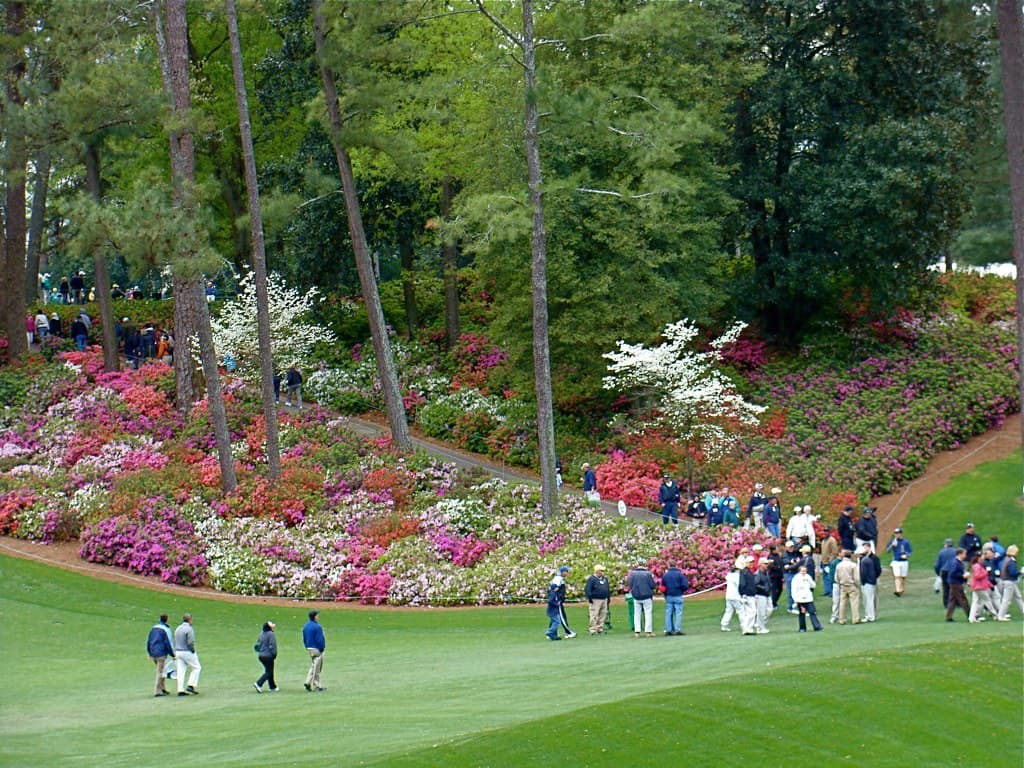
Augusta National isn't merely a golf course; it's a living, breathing entity that demands respect, precision, and an iron will from every competitor. The legendary undulating greens, particularly within the infamous Amen Corner, are notorious for punishing even the slightest miscalculation, routinely turning what appear to be routine birdie opportunities into devastating bogeys. The four par-5s offer crucial eagle opportunities, but only to those who can execute flawless second shots, making strategic risk-taking and impeccable course management absolutely paramount for any player hoping to don the green jacket.
Beyond the unparalleled glory, the Masters green jacket is an undeniable golden ticket in the cutthroat business of professional golf. The winner takes home a staggering share of the total prize purse, which for 2025 topped $18 million, with the champion pocketing over $3.2 million directly. More significantly, a Masters victory instantly and exponentially elevates a player's brand value, leading to lucrative, multi-million dollar endorsement deals with global giants like Nike, Callaway, Titleist, and Rolex, effectively solidifying their financial future and marketability for decades to come. This is where the business of golf truly intersects with athletic achievement.
The pressure at Augusta is unlike any other event in sports, a potent blend of history, immense expectation, and the profound knowledge that a win here fundamentally alters a player's entire trajectory. For seasoned veterans, a Masters victory is about cementing an unassailable legacy; for younger, rising stars, it's about definitively announcing their arrival on golf's biggest, most unforgiving stage. Every single shot carries the immense weight of history, every putt a potential turning point in a career, making the mental game and sheer fortitude as critically important as the physical prowess.
While advanced models are undeniably powerful tools for forecasting, golf remains a sport played by humans under truly immense pressure, and Augusta National has a notorious reputation for devouring nerves for breakfast. My gut tells me that while the data points to some surprising names, the green jacket ultimately goes to a player who not only knows how to navigate those treacherous greens but possesses the unshakeable mental fortitude to close it out when it matters most. Forget the longshots and the statistical anomalies; the champion will be the one who embraces the chaos, delivers under the brightest lights, and that means Patrick Cantlay, with his steely resolve and consistent ball-striking, is the one to watch, regardless of what any algorithm might suggest.


