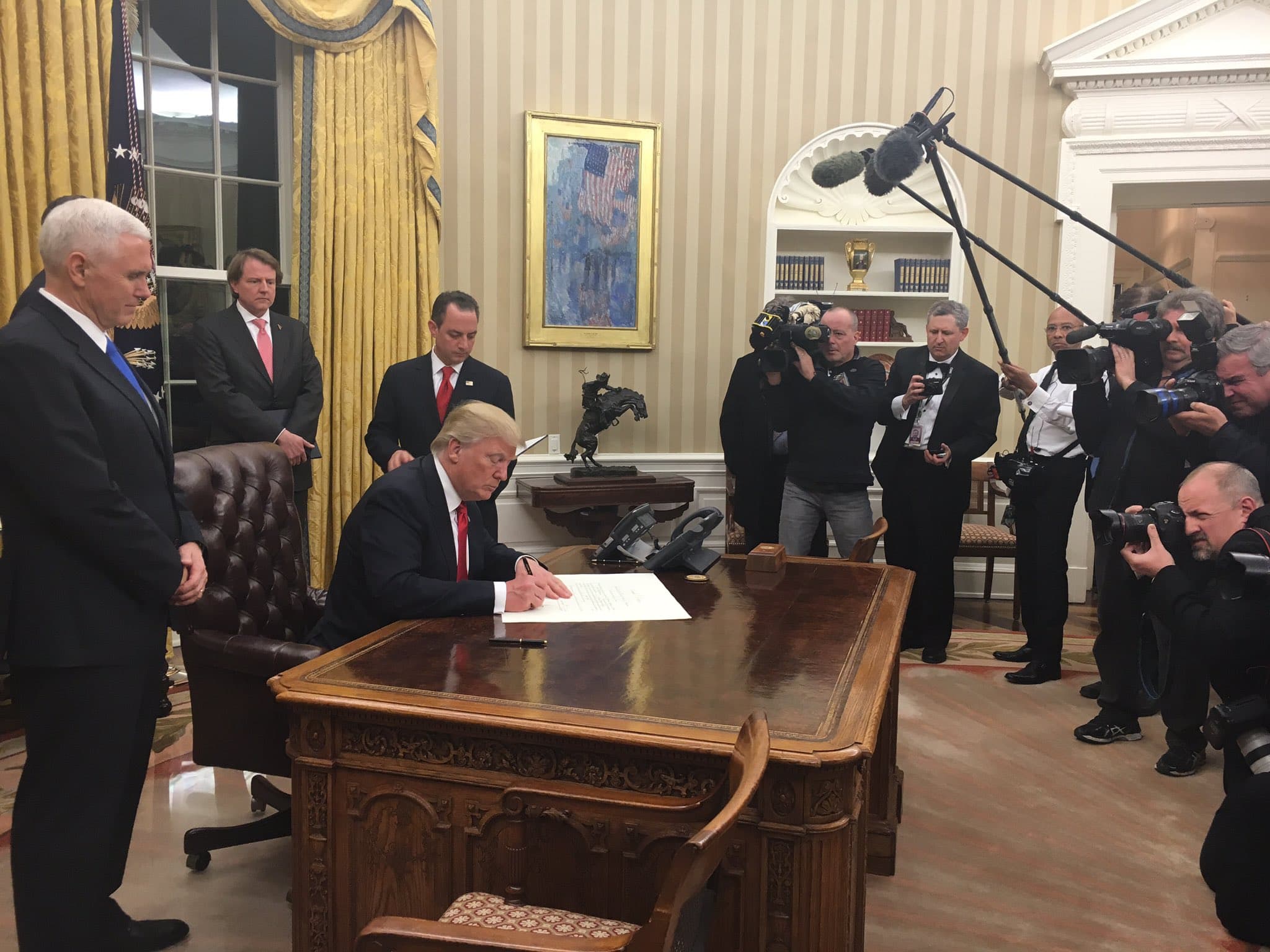
President Donald Trump’s direct challenge to an ABC reporter’s account of a post-White House Correspondents' Association dinner call has sent a palpable ripple of unease through Washington, highlighting the volatile nature of political discourse and its often-underestimated impact on financial markets. This public disagreement, while not a direct policy action, underscores the deep divisions within the capital and the administration’s combative stance towards certain media outlets, creating an environment ripe for investor apprehension and risk re-evaluation. The immediate fallout, though subtle, registered across major U.S. indices, reflecting how even non-policy-specific presidential friction can erode confidence in governmental stability and the predictability of executive actions. Such incidents often signal an administration less inclined towards consensus-building or transparent communication, a factor that weighs heavily on the minds of major institutional investors and corporate strategists assessing long-term U.S. economic prospects. The ongoing tension between the executive branch and the press corps can translate directly into a perception of increased political risk, impacting capital allocation decisions.
The market reaction to this political friction was discernible, albeit not catastrophic, as investors digested the implications of heightened executive-media tensions. The Nasdaq Composite saw a slight dip of 0.2 percent, closing at $25,068, while the S&P 500 followed suit, falling 0.4 percent to $7,201, signaling broad market caution. The Dow Jones Industrial Average experienced a more pronounced decline of 1.1 percent, settling at $48,942, and the Russell 2000, representing smaller cap stocks often more sensitive to domestic political shifts, slid 0.6 percent to $2,796. This collective downturn in equities suggests that even indirect political instability can prompt a re-evaluation of risk premiums across various sectors. In contrast, the cryptocurrency market showed relative resilience, with Bitcoin trading at $80,513, up 0.6 percent, and Ethereum holding at $2,366, down 0.3 percent, indicating that while broader market sentiment is sensitive to political noise, digital assets might be increasingly viewed through a different lens, though certainly not immune to systemic shocks originating from core economic policy.
This latest White House-media skirmish casts a long shadow over an already complex legislative landscape, particularly concerning financial regulation and nascent sectors like digital assets. Congress faces an uphill battle to pass comprehensive legislation on stablecoins or broader crypto market frameworks, with bipartisan efforts frequently derailed by political infighting and executive branch distractions. A White House preoccupied with media narratives and public perception battles may divert crucial attention and political capital away from pushing through complex economic reforms or regulatory clarity, especially as the 2026 midterm elections approach. The lack of a clear, unified message from the administration, coupled with perceived hostility towards traditional information channels, can further complicate efforts by key committees, such as Senate Banking or House Financial Services, to advance critical bills that require executive cooperation and public trust. This environment can lead to legislative paralysis, delaying crucial updates to financial laws.
The power dynamics at play reveal clear winners and losers in this environment of escalating political contention. Hardline factions within the Republican party, who often campaign on anti-establishment and anti-media platforms, find their positions reinforced by such presidential actions, potentially gaining significant leverage in intra-party debates and primary contests. Conversely, industries and financial institutions advocating for regulatory stability and predictable policy environments are significant losers, facing an uphill battle for legislative attention. Major players like BlackRock and Fidelity, who have invested heavily in the U.S. crypto market through Bitcoin and Ethereum spot ETFs, require a calm legislative atmosphere to expand their offerings and attract more institutional capital. Lobbying groups such as the Blockchain Association and the Chamber of Digital Commerce, representing hundreds of crypto firms, face increased difficulty in advancing their agenda when political focus shifts to internal disputes rather than substantive policy, making their expensive K Street efforts less effective.
The industry impact extends beyond traditional finance into the burgeoning digital asset space, where regulatory uncertainty remains the primary impediment to mainstream adoption and institutional integration. Companies like Coinbase and Kraken, operating U.S. crypto exchanges, thrive on clear rules of engagement, which this type of political noise fundamentally undermines by creating an unpredictable policy horizon. Tech giants like Meta, pursuing innovations in digital payments and the metaverse, also feel the chill of an unpredictable regulatory climate, particularly as they navigate potential antitrust concerns and data privacy legislation, which often require extensive executive branch input. Delays in establishing federal guidelines for stablecoins, for instance, could force a patchwork of state-level regulations, increasing compliance costs and hindering nationwide scalability for fintech innovators. This fractured approach disadvantages U.S. companies against international competitors operating in jurisdictions with more defined digital asset frameworks and less political turbulence.
From a legal perspective, the dispute, while not directly involving specific legislation, highlights the critical role of executive branch communication and the public perception of transparency in governance, which underpins the rule of law. A strained relationship between the President and the press can subtly influence the broader legal and regulatory environment, fostering an atmosphere where trust in official statements and government data might be questioned by the public and market participants alike. This dynamic can affect the perceived legitimacy and effectiveness of regulatory agencies like the SEC, led by Chair Paul Atkins, or the CFTC, particularly when they issue guidance or enforcement actions that require public confidence to be truly effective. While not a direct legal challenge, the erosion of faith in official narratives can complicate the enforcement of existing regulations and public buy-in for new ones, adding an invisible layer of compliance risk for businesses navigating complex and often ambiguous rules.
Looking ahead, the implications of this contentious political climate for future legislative and regulatory pipelines are substantial and far-reaching. The administration’s approach to media relations in the coming months will be a key indicator of its willingness to engage in bipartisan compromise on critical economic issues, from federal spending to tax reform, all of which impact corporate bottom lines. For the digital asset sector, ongoing political infighting means that comprehensive federal legislation for stablecoins or market structure is likely to remain stalled, pushing the onus onto regulatory agencies to provide clarity through enforcement actions or limited guidance. This piecemeal approach, while offering some direction, often lacks the legal certainty and broad scope that only congressional action can provide, leaving the industry in a perpetual state of anticipation and hindering long-term strategic planning for major financial institutions.
The bottom line for Gokhshtein Media is clear: even seemingly peripheral political skirmishes carry significant financial weight, acting as potent indicators of the broader health of Washington’s governance and its capacity for effective policymaking. President Trump’s public dispute with an ABC reporter, irrespective of its specifics, injects a level of political volatility that directly impacts investor confidence and the efficiency of the legislative process, making capital markets more reactive to non-economic news. This ongoing friction serves as a stark reminder that political stability is a foundational pillar for economic growth and regulatory predictability, especially for emerging sectors like the digital asset market, which rely heavily on clear governmental signals. Until a more cohesive and less confrontational political environment emerges, businesses and investors must brace for continued uncertainty, navigating a landscape where political noise often overshadows substantive policy progress and creates unnecessary market headwinds.


