
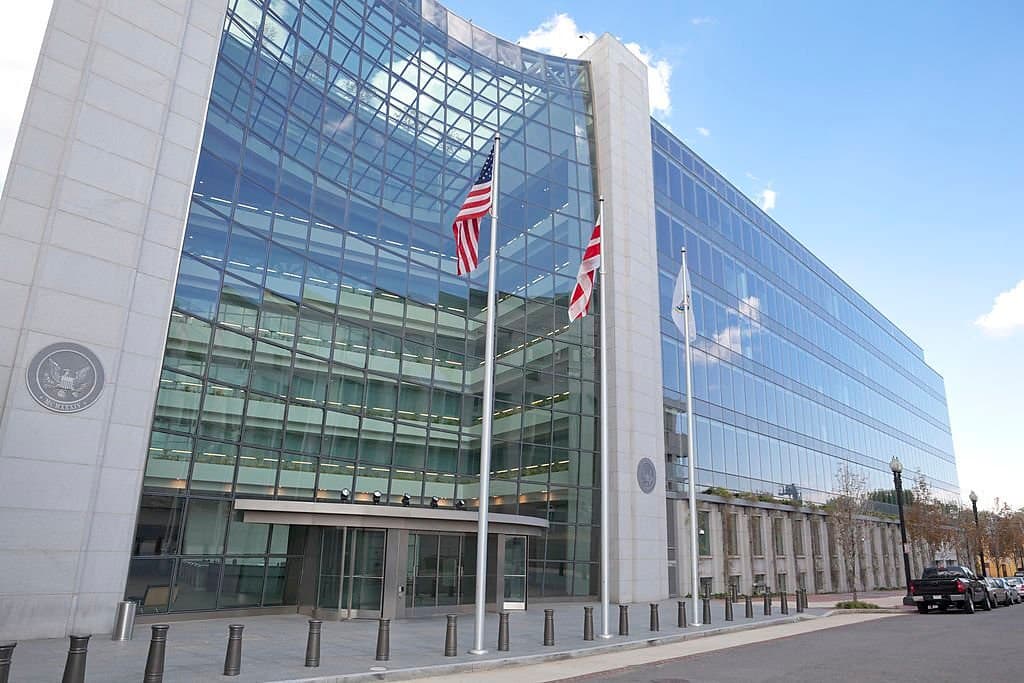
Nasdaq President Tal Cohen said the Securities and Exchange Commission's refined regulatory stance allows crypto markets to "build" again. This shift follows milestones including the January approval of spot Bitcoin exchange-traded funds and the May approval of spot Ethereum ETFs. These approvals created legitimate pathways for traditional finance to engage with digital assets, changing market dynamics. The institutional on-ramps provide confidence for large-scale capital deployment that was previously hesitant.
The impact of this clarity is evident in sustained institutional interest. Since their approvals, spot Bitcoin and Ethereum ETFs have attracted billions in new capital, signaling broader acceptance among asset managers. This influx supports current market valuations, with Bitcoin trading at $81,160 and Ethereum at $2,327. These products offer regulated exposure, integrating digital assets into investment portfolios without direct custody burdens. This integration drives demand for robust market infrastructure, a core focus for exchanges like Nasdaq.
On-chain activity also reflects this renewed confidence. Developer communities are actively building new protocols and applications, anticipating a more stable regulatory environment. Projects focused on real-world asset tokenization and institutional decentralized finance are seeing increased venture capital interest. This growth is a direct response to reduced regulatory uncertainty, allowing innovators to focus on product development rather than navigating ambiguous legal frameworks. The shift promotes long-term investment in blockchain technology's underlying utility.
Cohen's remarks reflect a broader trend of convergence between traditional finance and digital assets. Nasdaq itself provides technology and services to various digital asset exchanges, benefiting from a clearer regulatory landscape. This integration extends beyond just ETFs, encompassing custody solutions, trading platforms and data analytics for institutional clients. The SEC's measured approach, while initially cautious, now provides a framework that encourages responsible growth and market participation from established financial players.
This era of regulatory clarity reduces a primary risk factor for investors and developers alike. It signals a maturation of the digital asset class, moving beyond speculative trading to embrace its potential for financial system innovation. The ability to "build" again means capital and talent can flow more freely into developing secure, compliant and scalable blockchain solutions.