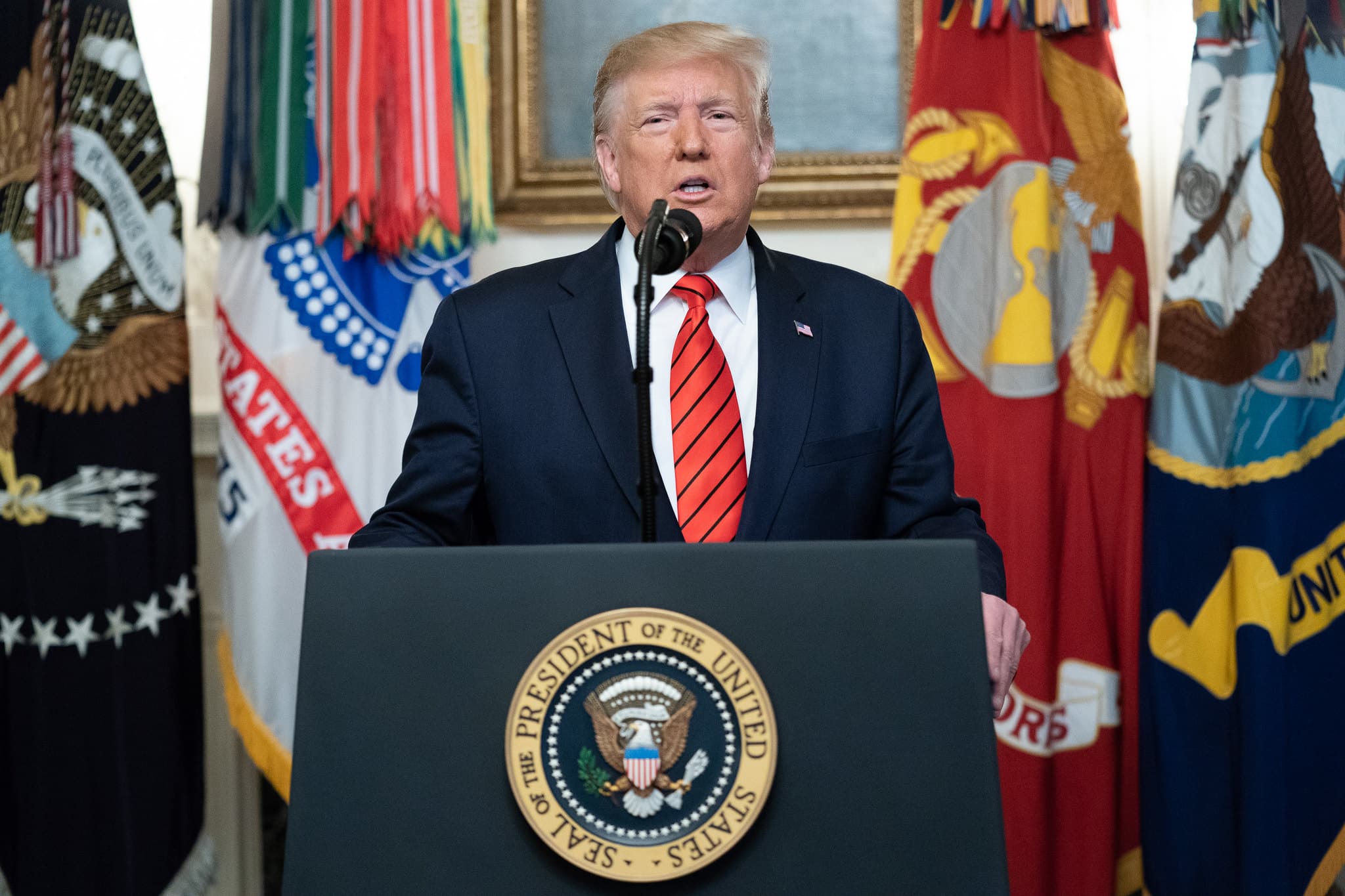
WASHINGTON — President Trump announced today that a joint operation between U.S. and Nigerian forces killed a top Islamic State commander in West Africa. The raid targeted Abu Ibrahim al-Hashimi al-Qurashi, identified as the leader of ISIS-West Africa Province, in Nigeria's Borno state, a hotbed of extremist activity. This marks an escalation of direct U.S. military involvement in regional counterterrorism, moving beyond traditional advisory and intelligence support.
The successful strike provides a clear political victory for President Trump, reinforcing his administration's commitment to projecting U.S. power globally against extremist threats. For Nigerian President Bola Tinubu, the operation strengthens his domestic standing and demonstrates progress against a persistent insurgency that has destabilized the nation's northeast for years, displacing over two million people. Nigeria has spent an estimated $2.5 billion annually on its military operations in the region since 2020, often relying on foreign military aid.
U.S. security interests in West Africa extend to protecting vital oil and gas infrastructure, securing maritime trade routes and countering China's growing economic footprint across the continent. The Pentagon has allocated over $1.2 billion in security assistance and training programs to African partners since 2023, with a focus on nations battling Islamist militants. Major U.S. companies like ExxonMobil and Chevron maintain energy assets in Nigeria, making regional stability a crucial priority for U.S. foreign policy and corporate investment.
The death of al-Qurashi severely disrupts ISIS's operational command and propaganda efforts in a region where the group has sought to expand its territorial control and recruitment. However, local security analysts warn that the underlying factors driving extremism — including widespread poverty, governance failures and inter-communal conflict — persist. Other extremist factions, including Boko Haram and al-Qaeda affiliates, continue to operate, competing with ISIS for resources and influence among local populations.
Defense contractors stand to benefit from the sustained U.S. security posture in Africa, as operations like this highlight the need for advanced military capabilities. Companies such as Northrop Grumman and General Dynamics regularly lobby Congress for increased funding for intelligence, surveillance and reconnaissance platforms and specialized military equipment. Their political action committees contributed over $15 million to federal campaigns in the 2024 election cycle, ensuring continued support for defense spending tied to overseas contingencies.


