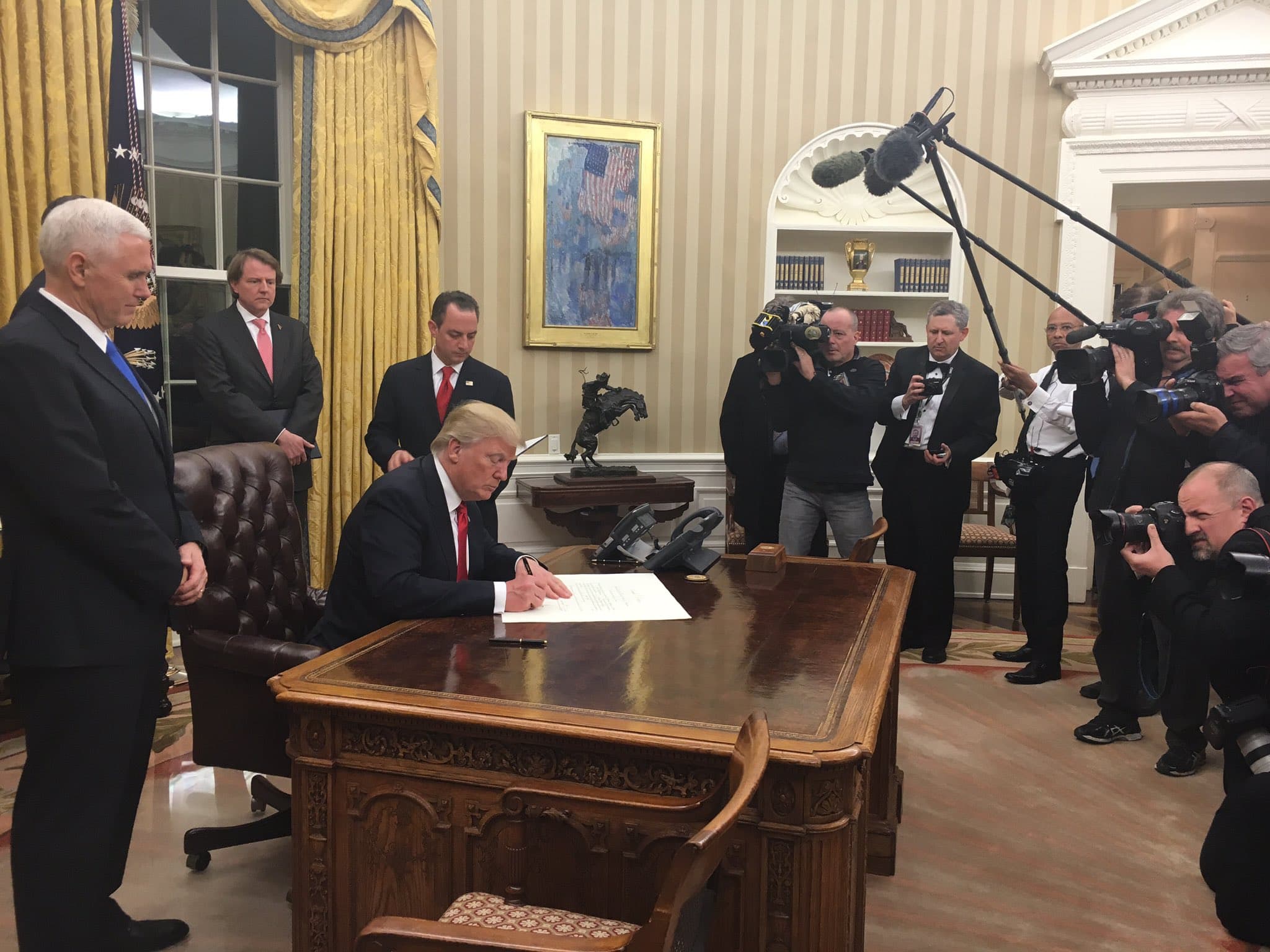
WASHINGTON — President Trump convened a meeting of top national security advisors to discuss military options against Iran, a session held after his decision to pause a retaliatory strike. The discussions signal a critical juncture for U.S. policy in the Middle East, with immediate implications for global energy markets and defense spending.
The Dow Jones Industrial Average dropped 0.2 percent today, closing at 49,590, reflecting market sensitivity to escalating geopolitical risk. The S&P 500 also fell 0.2 percent, ending the day at 7,388, while the Nasdaq Composite declined 0.3 percent to 26,006.
The pause in military action, initially planned in response to an attack on U.S. assets, revealed a split in strategy among key advisors. Hardline factions within the administration advocate for a decisive military response, pushing for a robust show of force. Other voices, including some from the State Department, push for diplomatic channels and de-escalation, arguing for a measured approach to avoid broader regional conflict. This internal debate directly influences the trajectory of oil prices, which typically rally on regional instability, creating volatility for energy traders.
Defense contractors stand to gain from any escalation. Major players like Lockheed Martin, Raytheon and Boeing often see stock increases as military tensions rise, driven by expectations of increased government contracts and long-term procurement. Conversely, major airlines and logistics firms face higher fuel costs and potential disruptions to global supply chains, presenting a drag on their profitability. Amazon's stock fell 2.2 percent today, closing at $259.15, as investors considered the broader economic impact of instability.
The White House faces sustained pressure from a coalition of defense industry lobbyists, who have historically pushed for robust military engagement and increased defense budgets. These groups spent over $150 million in 2025 advocating for defense priorities, according to OpenSecrets data, highlighting their continued influence on foreign policy decisions. Their efforts aim to secure long-term military spending commitments regardless of specific geopolitical events.
A decision to escalate would shift substantial federal resources toward military operations, potentially diverting funds from domestic programs and economic initiatives. This creates a clear power dynamic where defense interests gain at the expense of other sectors reliant on government spending or a stable global environment. President Trump's final choice will determine billions in future spending and shape market direction for the coming months.


