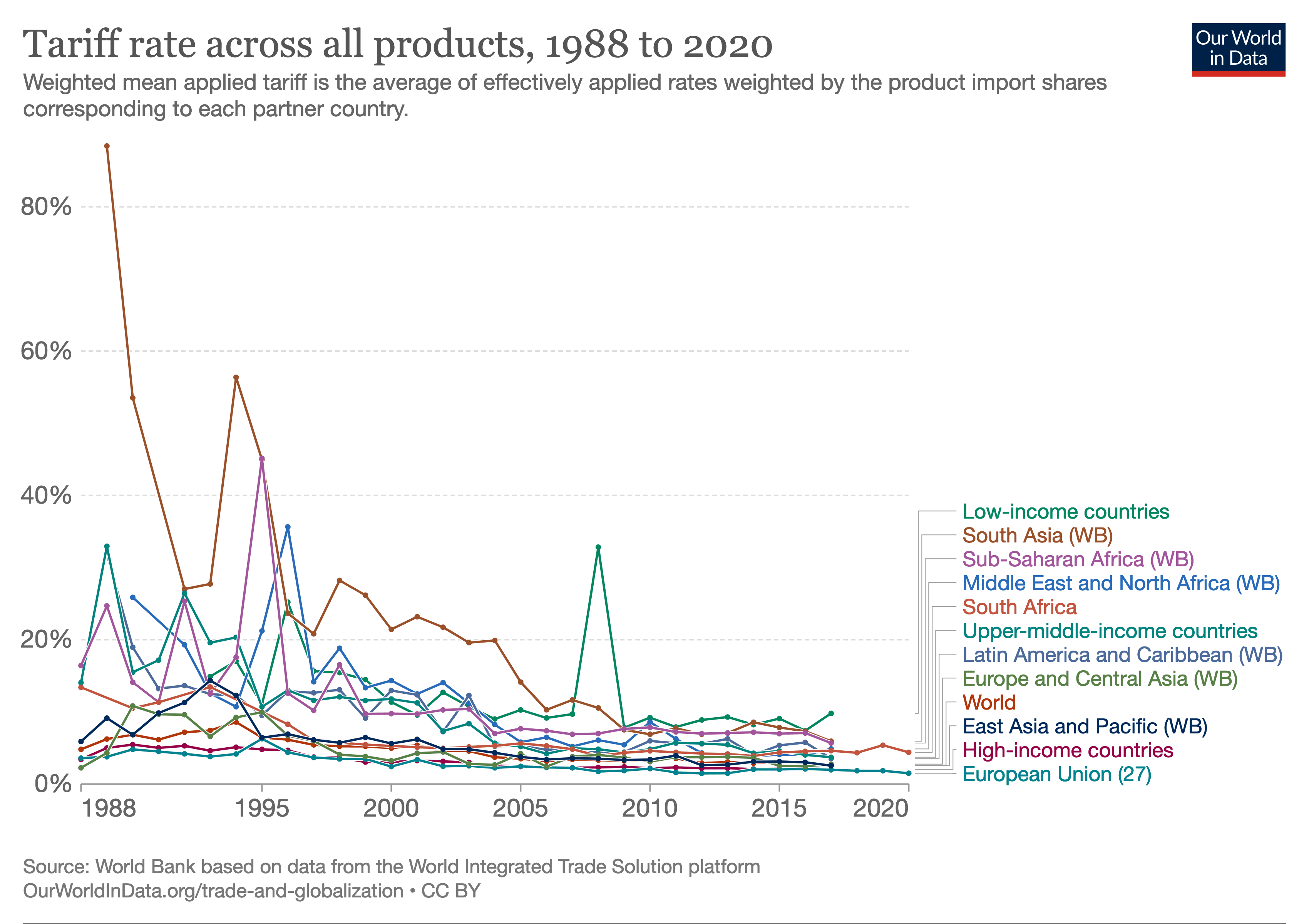
WASHINGTON — President Trump imposed new import duties on goods from 60 countries, effective immediately, citing widespread forced labor practices as the basis for the new tariff regime. The Dow Jones Industrial Average fell 1.0 percent to 51,712 following the announcement.
The tariffs target a broad range of products, from textiles and electronics to agricultural goods and raw materials. U.S. retailers and manufacturers face immediate pressure to re-evaluate global sourcing strategies. Apple, which sources components globally, could see increased production costs and margin compression. Amazon and other e-commerce platforms may face higher import expenses, pressuring their competitive pricing.
Technology and consumer discretionary stocks fell sharply. Apple dropped 1.3 percent to $321.66. Amazon fell 4.6 percent to $233.66. Tesla, heavily exposed to global manufacturing and consumer sentiment, fell 14.5 percent to $319.69. Microsoft declined 2.2 percent to $381.58, and Alphabet dropped 7.1 percent to $317.69. The declines reflect investor concern over margin compression and supply chain reconfiguration across multiple sectors.
The new duties threaten to push inflation higher as import costs rise. Analysts expect companies to pass some costs to consumers, dampening discretionary spending and further pressuring consumer-facing businesses. The move also raises the risk of retaliatory measures from affected nations.
Investors should monitor corporate earnings calls over the next two quarters for commentary on supply chain resilience and tariff exposure. Companies with strong domestic manufacturing or diversified international supply chains may prove more resilient. Firms reliant on single-country sourcing from targeted nations face significant headwinds and potential earnings revisions. Stocks with clear cost-mitigation strategies are likely to outperform.