The digital asset landscape is undergoing a decisive shift from speculative chaos to institutionalized order. This week alone, two established platforms—BitMart and SummerFi—announced their wind-downs after nine and seven years respectively, signaling a market reckoning. BitMart's BMX token plummeted 58 percent immediately following the news, reflecting the brutal reality that operational resilience and regulatory compliance are now non-negotiable. SummerFi cited an exploit, underscoring the critical need for ironclad security infrastructure that many smaller players simply cannot sustain in an increasingly complex and regulated environment. This is not merely a correction; it is the Great Crypto Consolidation, filtering out the non-compliant and undercapitalized, while fortifying the foundations for a legitimate, integrated financial future.
Europe's regulatory framework, notably the Markets in Crypto-Assets (MiCA) regulation, acts as a primary catalyst for this consolidation. MiCA's mandates for operational integrity, consumer protection and financial stability set a high bar for digital asset service providers operating within the European Union. This environment drives an inescapable M&A wave, forcing smaller entities to either merge with larger, compliant players or exit the market entirely. The cost of compliance, coupled with the capital requirements for licensing under MiCA, ensures that only well-resourced and strategically aligned firms can compete, accelerating the institutionalization of the crypto sector across the continent.
Across the Atlantic, the United States is rapidly solidifying its own regulatory posture, providing critical clarity that complements Europe's stringent approach. President Trump's administration, with SEC Chairman Paul Atkins at the helm, continues to champion a clear regulatory pathway. The CLARITY Act, a market-structure bill, is advancing through Congress, set to definitively delineate digital assets as either securities under the SEC or commodities under the CFTC. This legislative action, alongside the GENIUS Act—the stablecoin law signed in 2025—establishes a federal framework for payment stablecoin issuers, mandating robust reserves and transparent audits. This dual legislative push eliminates the ambiguity that previously allowed non-compliant entities to thrive, forcing all market participants to adhere to defined federal standards.
Amidst these closures and regulatory pressures, significant institutional capital continues its strategic deployment, validating the long-term trajectory of the digital asset space. EDX Markets, a regulated digital asset exchange backed by major financial players, successfully closed a $76 million Series C funding round, led by SBI Holdings. This investment demonstrates institutional confidence in compliant, robust trading infrastructure. Concurrently, eToro, a global multi-asset investment platform, announced a strategic stake in Extended, an onchain derivatives exchange, with plans to integrate Extended's technology into its Zengo offering. Such moves are calculated investments in the future of regulated, technologically advanced financial services, building on the two-year track record of Bitcoin spot ETFs approved in Jan. 2024 and Ethereum spot ETFs approved in May 2024.
The global embrace of digital asset infrastructure extends beyond Western markets, with Russia's largest bank, Sberbank, announcing plans to launch crypto trading infrastructure by December. This initiative by a state-backed financial institution signifies a critical shift in global financial architecture, where traditional banking powerhouses are actively building pathways for digital asset integration. Sberbank's move will unlock access for millions of new users and substantial capital, further eroding the 'wild west' narrative and solidifying crypto's role within established financial systems. This is a direct consequence of the regulatory clarity emerging globally, enabling large, risk-averse institutions to finally participate.
Technological innovation continues to drive real-world utility, moving beyond speculative trading. The field of tokenized weather derivatives exemplifies crypto's most important real-world application. By using blockchain technology to democratize access to complex financial instruments, tokenization enables farmers, insurers and other industries to hedge against climate risks with efficiency and transparency. This application directly addresses a multi-trillion-dollar market need, proving that the underlying technology offers solutions to tangible economic challenges and attracting serious capital and talent.
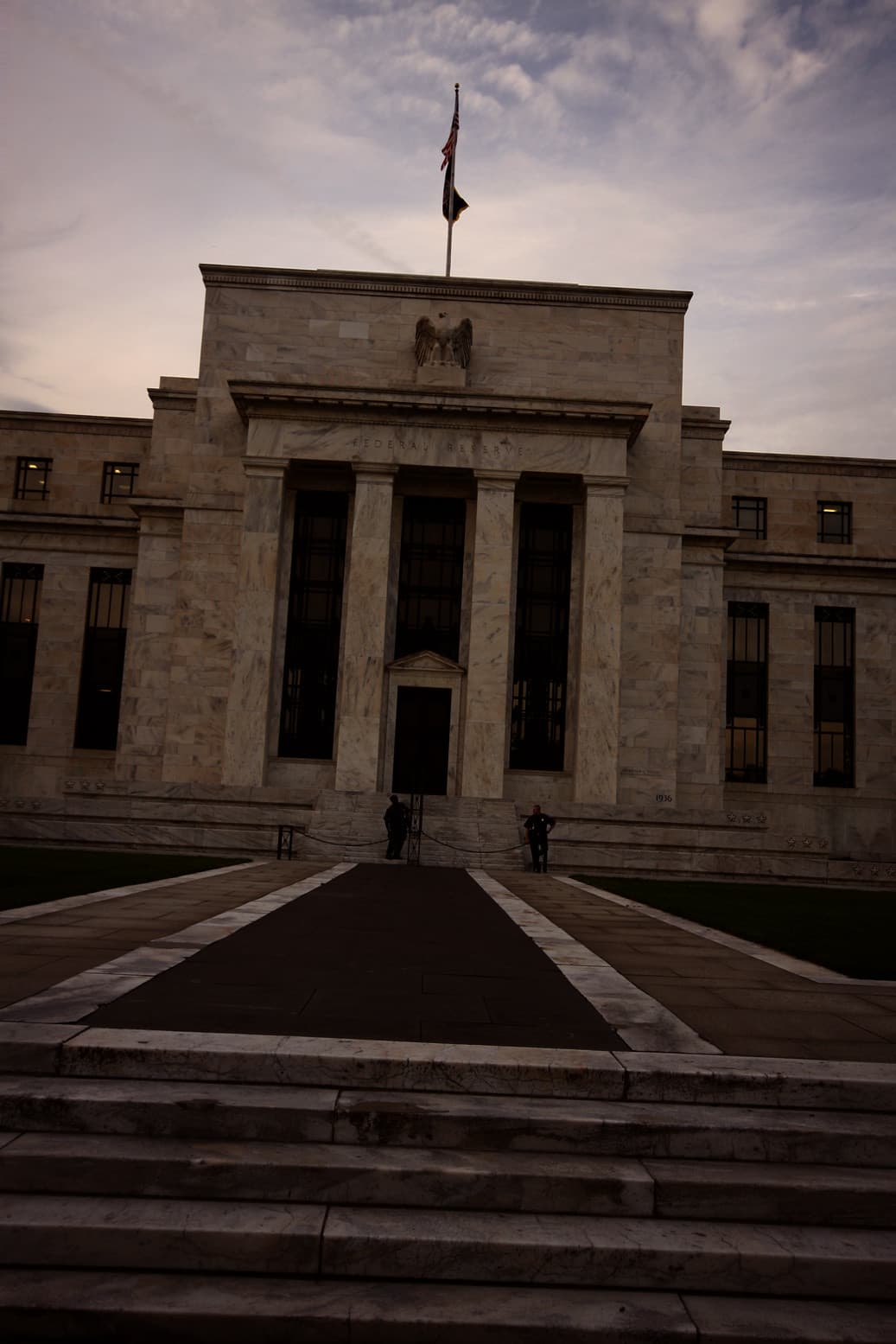
The broader market reflects this period of transition and re-evaluation. While the Dow Jones trades up 0.5 percent at $51,947 and the S&P 500 holds flat at $7,412, the Nasdaq registers a 0.6 percent decline to $24,976, mirroring mixed performance among tech giants. Apple leads with a 3.5 percent gain to $333.02, while Tesla drops 2.1 percent to $313.03 and Meta falls 1.8 percent to $595.19. This volatility reflects an underlying caution in the market, further evidenced by the Crypto Fear & Greed Index registering 26, firmly in "Fear" territory. This market apprehension directly influences institutional risk appetite, creating a demanding environment where only the most robust and compliant projects can secure funding and thrive, a reality acknowledged by Federal Reserve Chairman Kevin Warsh.
This consolidation is not a setback; it is an essential evolution. The era of permissionless, unregulated experimentation is concluding. The future belongs to compliant, well-capitalized entities that can navigate complex global regulatory frameworks, deliver institutional-grade security and use blockchain technology for tangible economic benefit. The market is distinguishing between genuine innovation and unsustainable speculation, driving a necessary culling that will ultimately strengthen the entire digital asset ecosystem.
Watch for further legislative progress on the CLARITY Act in U.S. Congress by Q4 2026, which will provide definitive regulatory classifications for countless digital assets. Monitor the implementation timeline for Sberbank's crypto trading infrastructure, expected to be fully operational by December, as this will unlock a new tranche of global liquidity. Pay close attention to the next earnings calls from firms like EDX Markets and eToro for updates on their strategic integrations, which will provide hard data on institutional adoption rates.