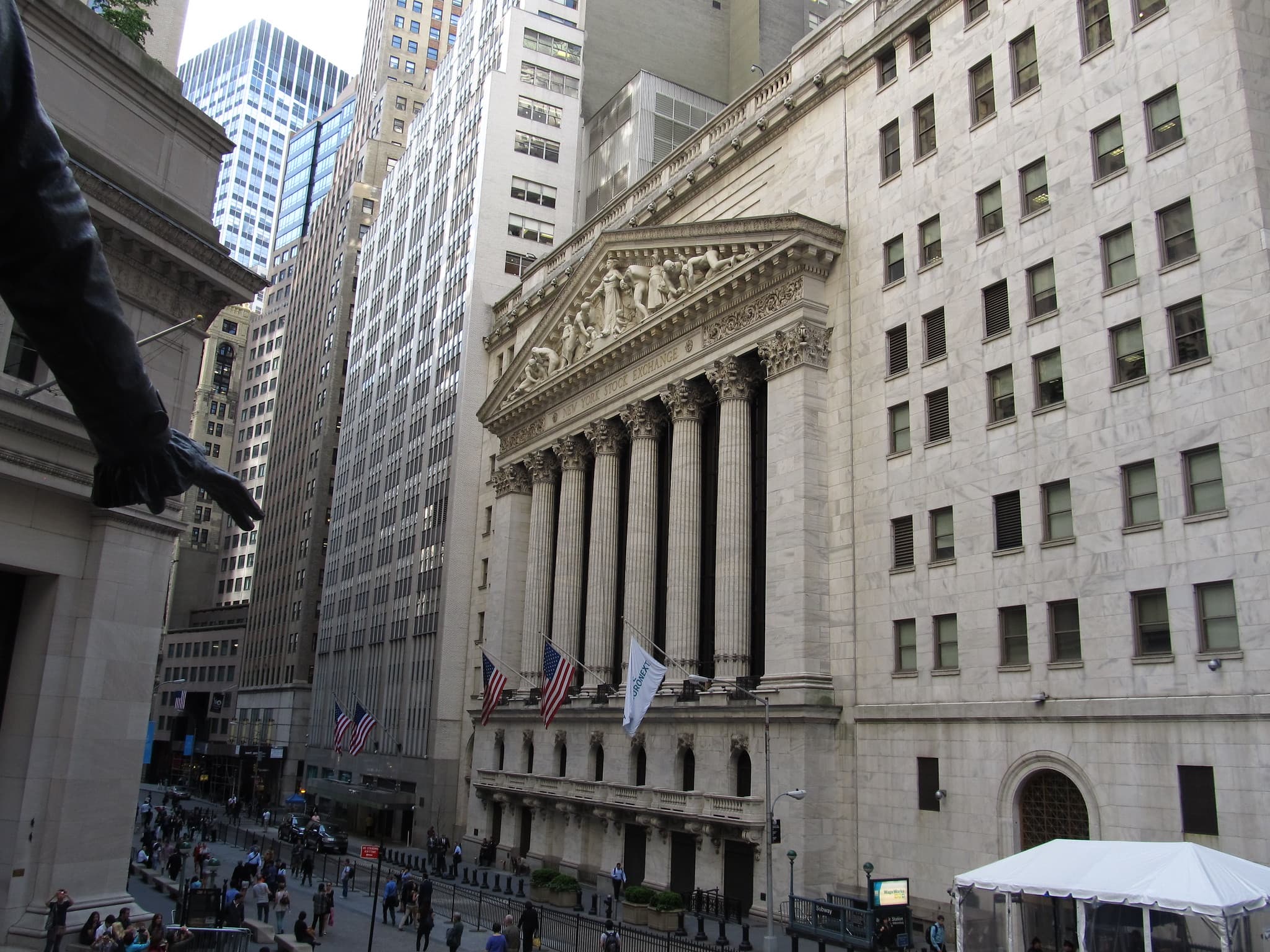
NEW YORK — The S&P 500 fell 0.79 percent after President Trump ordered a blockade of the Strait of Hormuz, a move aimed at disrupting oil shipments from the region that immediately roiled global markets.
The strait is a critical maritime chokepoint, handling roughly one-fifth of the world's total petroleum consumption. A blockade directly threatens global oil supply, raising concerns about energy cost spikes that would pressure corporate operating expenses and consumer purchasing power.
Major U.S. indices reacted unevenly. The Nasdaq Composite dropped 0.6 percent to 24,976, and the Russell 2000 fell 0.3 percent to 2,930. The Dow Jones Industrial Average bucked the trend, rising 0.5 percent to 51,947, signaling a rotation into defensive sectors with limited global exposure.
Technology stocks bore the brunt of the selloff. Tesla dropped 2.1 percent to $313.03, Meta Platforms fell 1.8 percent to $595.19 and Amazon slid 0.7 percent to $232.11 as investors grew cautious on global supply chains and demand.
Not every large-cap name retreated. Apple rose 3.5 percent to $333.02 and Alphabet climbed 0.6 percent to $319.74, while Microsoft finished flat at $381.70. The split outcome reflects investors reassessing individual company resilience against geopolitical risk in a higher-volatility environment.