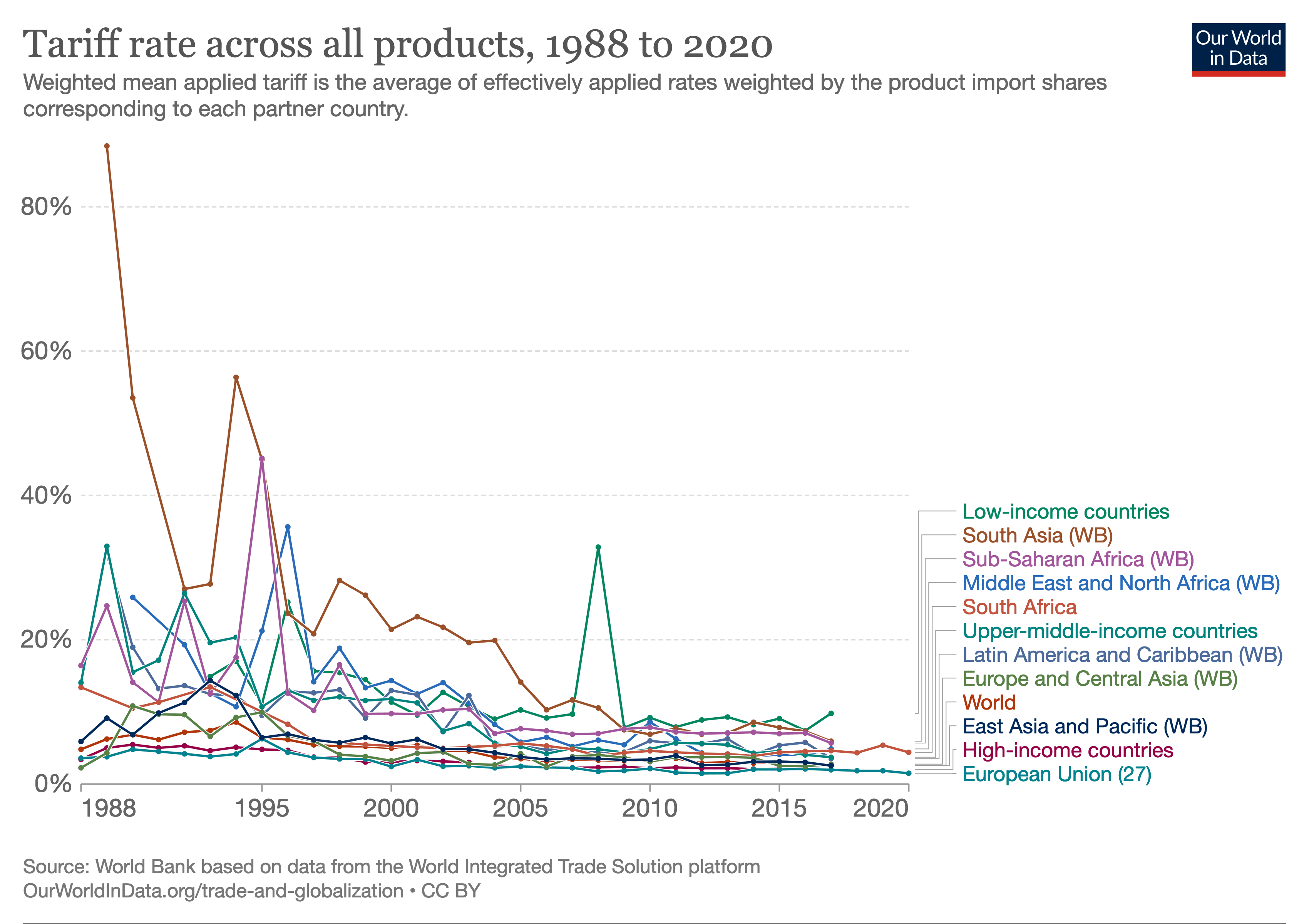
President Trump is advancing a plan to restore tariffs on imported goods, a decisive shift in U.S. trade strategy aimed at prioritizing domestic industries. The move stands to redraw global supply chains and international economic relations, creating new dynamics for capital flows.
The proposed tariffs would directly raise the cost of imports across sectors, from raw materials to consumer electronics. That inflationary pressure hits consumer purchasing power and corporate profit margins alike, forcing businesses to rework sourcing strategies. Economists widely expect the measures to stimulate domestic production while pushing prices higher on imported goods—a cost passed directly to the end user.
For digital asset investors, renewed tariffs sharpen Bitcoin's case as an inflation hedge and non-sovereign store of value. Bitcoin has historically drawn demand during periods of economic uncertainty and currency devaluation, acting as a flight-to-safety asset. The Crypto Fear & Greed Index currently sits at 30, deep in fear territory, signaling investors are already hunting for clarity and alternative allocations as the macro picture shifts. That environment favors assets outside traditional financial controls.
Trade friction from tariffs could also push more businesses toward stablecoins for cross-border transactions, cutting out traditional banking rails. Companies looking to reduce currency volatility and work around complex international payment systems may increasingly route payments through dollar-pegged assets like USDT or USDC. That flow would drive liquidity and volume across decentralized finance protocols, which offer a more efficient, censorship-resistant payment layer.