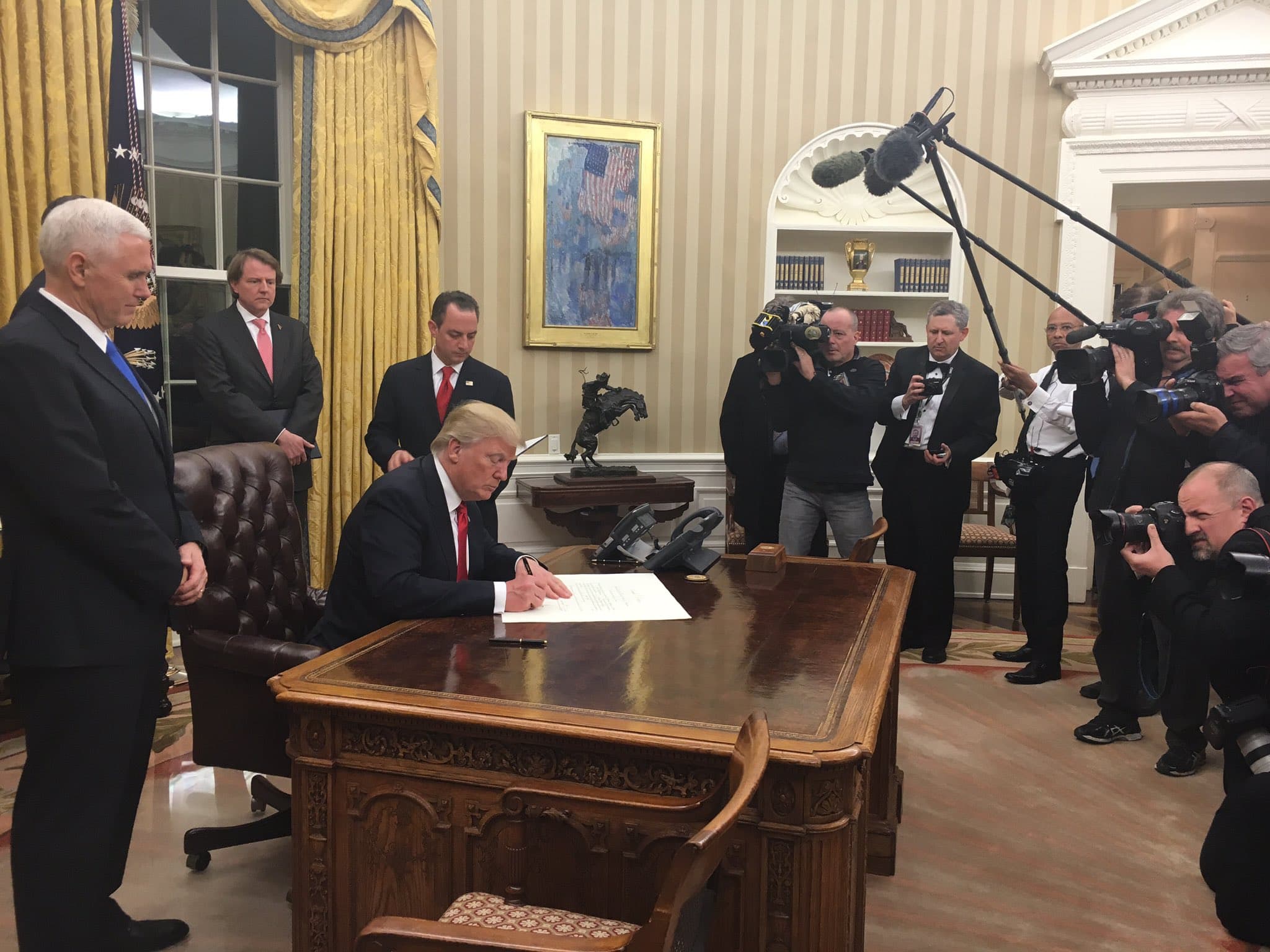
WASHINGTON — Bill O'Reilly said President Trump is "gambling" on his ability to sustain the U.S. economy's expansion, highlighting a high-stakes play by the White House. The administration continues its push for sweeping deregulation across key sectors and advocates for a second round of corporate and individual tax cuts. This strategy aims to spur investment and job creation, building on the initial economic momentum from 2025.
The core of this gamble centers on boosting corporate profitability and attracting foreign capital. Proponents argue reduced compliance costs and lower tax burdens will unleash a wave of private sector spending. Opponents, including some in Congress, warn this approach risks worsening the national debt, which has climbed past $36.5 trillion, and could fuel inflation if demand outpaces productive capacity.
Big business and the financial industry are the primary beneficiaries of this agenda. Powerful lobbying groups, including the U.S. Chamber of Commerce and the Business Roundtable, have actively pushed for these policies on Capitol Hill, spending millions on advocacy efforts. These organizations see the deregulation drive as essential for maintaining global competitiveness and shareholder value. Consumer protection advocates and environmental groups warn about potential market instability and long-term societal costs from weakened oversight.
Wall Street shows mixed reaction to the administration's economic plans. The S&P 500 gained 0.6 percent today, closing at 7,444, reflecting optimism in growth-oriented sectors. However, the Dow Jones Industrial Average dipped 0.1 percent to 49,693, suggesting caution among some investors about the long-term fiscal health of the United States. Energy markets also respond to the administration's pro-fossil fuel stance, with major oil companies seeing increased investment, while renewable energy firms face policy headwinds.
The political implications are clear as the administration positions its economic record for the 2028 election cycle. Vice President JD Vance has toured manufacturing hubs, highlighting job growth data and new factory openings tied to tax incentives. The administration aims to demonstrate tangible benefits for the working class, while critics point to rising income inequality and potential environmental consequences as the true cost of the strategy.