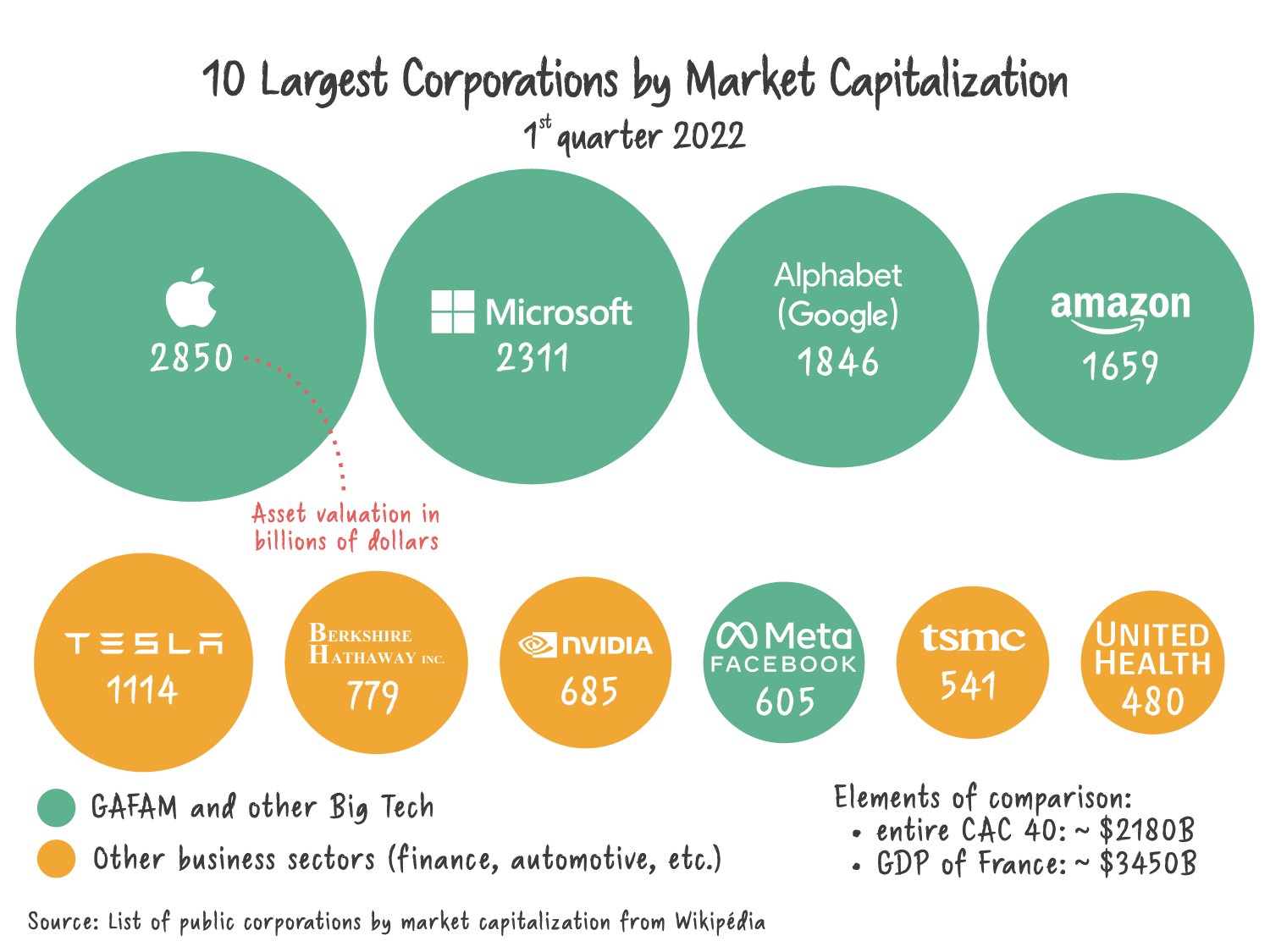
Today's market delivered a decisive verdict on Big Tech's AI-driven future, with a sharp divergence in post-earnings performance. The Nasdaq gained 2.8 percent to $25,122 and the S&P 500 rose 1.7 percent to $7,438, but broad optimism masked a brutal re-evaluation of sector leaders. Microsoft shares jumped 15.5 percent, closing at $451.10 in its best single-day performance since 2008, while Amazon climbed 3.9 percent to $235.50. Meta Platforms dropped 8.0 percent to $539.03, and Apple fell 1.4 percent to $333.43 on a weak forward outlook—crystallizing the market's conviction that not all tech giants are equally positioned for the artificial intelligence era.
Microsoft's rally stems directly from its integrated AI strategy, embedded across cloud services and enterprise software. CEO Satya Nadella has positioned Azure as the foundational layer for generative AI, reporting cloud growth that far exceeded analyst expectations. The company's partnership with OpenAI continues to drive enterprise adoption of Copilot across its productivity suite, from Office to Dynamics. A clear monetization pathway for AI capabilities put Microsoft at $451.10 at the close.
Amazon demonstrated its AI capabilities primarily through Amazon Web Services and internal applications. The earnings call highlighted AWS's role providing infrastructure for AI startups and enterprises, offering tools that broaden access to advanced models. Beyond the cloud, Amazon's use of AI in e-commerce, logistics and advertising delivered efficiency gains and revenue growth. That dual advantage—infrastructure provision and direct application—fueled its 3.9 percent rise to $235.50.
Meta Platforms faced a sharp selloff, its stock dropping 8.0 percent to $539.03, driven by ongoing skepticism about its long-term AI strategy and the persistent drag from Reality Labs. Despite significant investment in AI research for social media algorithms and metaverse development, the company has not articulated a near-term monetization path for generative AI that satisfies investors. Mark Zuckerberg's metaverse vision continues to consume billions in capital expenditures without a corresponding return, leading the market to question resource allocation while competitors demonstrate profitable AI integration.
Apple fell 1.4 percent to $333.43 after issuing a weaker-than-expected revenue forecast attributed to a lack of compelling new AI features. CEO Tim Cook's repeated emphasis on a "hybrid AI strategy" as a "competitive weapon" has not convinced investors seeking concrete, consumer-facing generative AI products. Apple's privacy-centric approach and on-device AI processing are technically sound, but the absence of a breakthrough large language model or a suite of AI services comparable to peers leaves a gap in its growth narrative. The market is penalizing companies that cannot demonstrate a clear pathway to AI-driven revenue expansion.
The broader market reaction reflects capital rotation within the technology sector, not a systemic selloff. Nvidia gained 2.6 percent to $195.04, reflecting sustained demand for AI hardware. Tesla rose 3.5 percent to $308.85 on its autonomous driving AI initiatives. Capital is moving from perceived AI laggards to demonstrated AI leaders.
This divergence carries implications under President Donald Trump and Treasury Secretary Scott Bessent, who have consistently advocated for U.S. technological leadership. The strong performance of Microsoft and Amazon signals continued investment in domestic high-tech industries, with potential contributions to economic growth metrics. Federal Reserve Chair Kevin Warsh, sworn in May 2026, is watching a market responding rapidly to technological shifts—one that influences his assessment of productivity gains and potential inflationary pressures, though his focus remains on price stability.
The regulatory environment also plays a role in the broader tech reshuffling, establishing clarity for emerging technologies outside this week's earnings cycle. The GENIUS Act, signed in 2025, provides the federal framework for payment stablecoin issuers, reserves and audits. The Digital Asset Market Clarity Act continues to define which digital assets fall under SEC or CFTC jurisdiction, a market structure measure that informs future innovation. SEC Chairman Paul Atkins maintains oversight of these markets amid rapid technological change.
Investors should watch Q3 2026 earnings in October for specific revenue attribution from new AI products, the efficiency of AI-related capital expenditures and the articulation of profitable AI roadmaps. For Apple, a decisive shift in AI strategy and concrete product announcements are needed; failure to break above $335 resistance signals continued underperformance. Meta must show a tangible return on Reality Labs or a clear pivot in resource allocation; a sustained drop below $530 would be deeply concerning. Microsoft and Amazon, trading at premium valuations, must sustain growth in AI services with disciplined capital spending. AI is no longer a differentiator in name only—it is now the line between companies the market rewards and companies it punishes.