Israel's parliament has passed a contentious bill allowing the death penalty for Palestinians convicted of terror-related killings of Israelis, a move that starkly highlights the escalating geopolitical tensions in an already volatile region. This legislative action, reported by the Financial Times, injects a fresh wave of uncertainty into the global risk environment, compelling institutional investors to re-assess the risk premium demanded across various asset classes. Such developments, while ostensibly localized, invariably ripple through global markets, directly influencing capital flows and recalibrating expectations for central bank policy, particularly concerning inflation and growth trajectories.
Today's market reaction reflects this heightened caution, even if not directly attributable solely to this specific news. The broader equity markets displayed a risk-off tone, with the Russell 2000 leading declines at -1.6% to $2,411, closely followed by the Nasdaq at -0.7% to $20,795 and the S&P 500 down 0.4% to $6,344. While the Dow Jones managed a modest gain of +0.1% to $45,217, the overall sentiment points to investors demanding greater compensation for risk. Demand for safe-haven assets, particularly U.S. Treasuries, likely saw an uptick, though specific yield movements are not available; however, the persistent bid for duration is a classic response to such geopolitical tremors. Despite the broader equity market weakness, Bitcoin holds at $66,438 (+0.2%) and Ethereum at $2,021 (+1.4%), a curious resilience against a backdrop where the Crypto Fear & Greed Index registers an extreme 8 (Extreme Fear), indicating underlying retail anxiety.
Historically, significant geopolitical events, particularly those with the potential to destabilize key energy-producing regions, have consistently led to a discernible flight-to-quality in fixed income markets. We witnessed similar patterns during the early 2000s and other periods of heightened Middle Eastern conflict, where a sustained risk premium became embedded in oil prices and, consequently, in global inflation expectations. This dynamic forces a re-evaluation of long-duration assets, as the prospect of higher, more persistent inflation erodes the real value of future cash flows and compels central banks to maintain tighter monetary policies for longer. The current situation, with an already complex global macroeconomic backdrop, adds another layer of complexity to this well-trodden historical playbook.
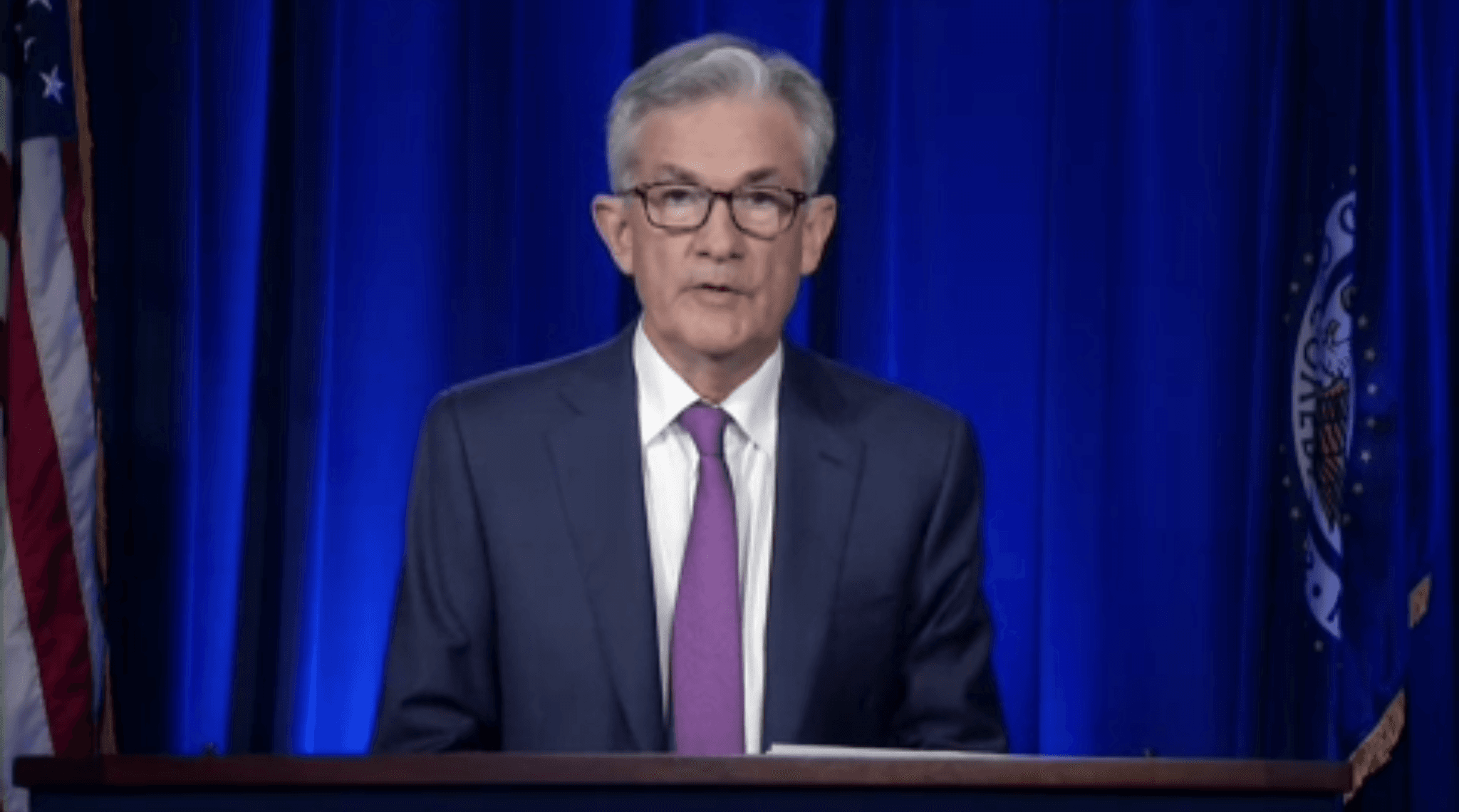
From a central bank perspective, this legislative action complicates an already intricate path for Federal Reserve Chair Jerome Powell and his global counterparts. Geopolitical instability, especially in the Middle East, presents an undeniable upside risk to energy prices, which directly threatens to derail the Fed's hard-won progress on disinflation. Higher oil prices would inevitably translate into increased headline inflation, forcing central banks like the Fed, ECB, and BOJ to weigh the trade-off between supporting growth and combating external price shocks. This added uncertainty makes forward guidance even more challenging, as the potential for renewed inflationary pressures from geopolitical sources demands a more hawkish consideration in their policy frameworks.
For fixed-income practitioners, the implications are clear: an elevated geopolitical risk premium typically translates into a renewed bid for high-quality sovereign debt, particularly U.S. Treasuries, which can temporarily push down yields at the long end of the curve as investors seek safety. However, this flight-to-quality is often counterbalanced by the inflationary potential of regional instability, which can steepen the *real* yield curve as inflation-risk premia expand. Credit spreads, especially for emerging market debt and corporate bonds in sectors sensitive to global trade and energy costs, are likely to widen as investors demand higher compensation for increased default and liquidity risk. This environment punishes those holding duration-heavy, lower-quality credit, highlighting the importance of rigorous credit analysis and prudent duration management.
Across asset classes, the ripple effects are already evident. Equities, as observed in today's performance of the Russell 2000 and Nasdaq, are directly impacted by the erosion of risk appetite and the uncertainty premium. Defensive sectors may see renewed interest, while growth-oriented and cyclically sensitive stocks face headwinds. Tech giants like Apple (-0.9% to $246.63), Tesla (-1.8% to $355.28), and NVDA (-1.4% to $165.17) showed vulnerability today, though Meta (+2.0% to $536.38) and Amazon (+0.8% to $200.95) bucked the trend. Commodities, especially crude oil, remain a critical watchpoint; any perceived escalation could trigger significant price spikes, further feeding into global inflation. While Bitcoin and Ethereum show resilience, the Extreme Fear index suggests that broader crypto market sentiment remains fragile, implying that institutional flows may be driving the current stability rather than widespread retail confidence.
Looking ahead, the market will scrutinize upcoming economic data releases, particularly inflation and employment reports, with an even keener eye for signs of compounding pressures from geopolitical events. Central bank meetings in the coming months will need to explicitly address these external risks, potentially adjusting their rhetoric to account for the added complexity. Diplomatic responses and any further legislative actions within the region will be critical determinants of whether this particular risk premium becomes entrenched or dissipates. Investors must remain agile, prepared for abrupt shifts in sentiment driven by news flow from an increasingly interconnected and volatile global landscape.
The bottom line for Gokhshtein Media readers is unequivocal: Israel's controversial death penalty bill is not merely a domestic political issue; it represents a tangible escalation of geopolitical risk that will reverberate through global financial markets. This development complicates central bank disinflationary efforts, elevates the risk premium across assets, and is likely to sustain demand for safe-haven fixed income while widening credit spreads in riskier segments. Investors must prioritize capital preservation, shorten duration selectively, and maintain a strong bias towards quality in credit. The path of least resistance for risk assets remains challenging until tangible de-escalation signals emerge from the region, making prudent risk management paramount in this elevated uncertainty regime.