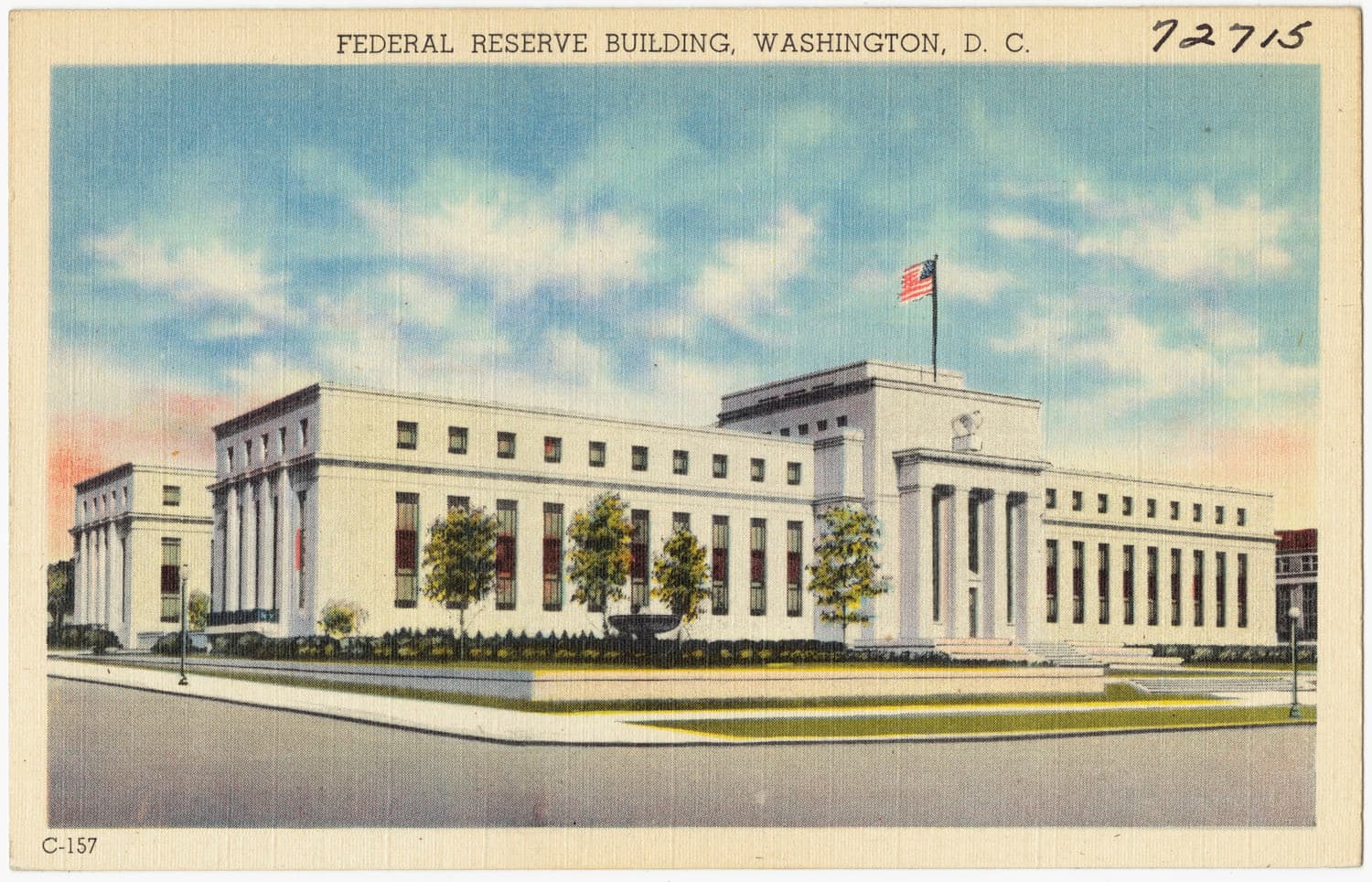
The Federal Reserve reported a 2.2% seasonally adjusted annual rate (SAAR) increase in total consumer credit for February, signaling a persistent, albeit moderating, demand-side impulse within the U.S. economy. This figure, though below some market expectations, still indicates that households are willing and able to leverage debt to sustain spending. Delving into the components, revolving credit, which largely comprises credit card balances, saw a modest 0.6% SAAR rise, suggesting some consumer restraint or perhaps a shift towards other financing avenues. However, nonrevolving credit, encompassing auto loans and student debt, surged by a more robust 2.8% SAAR, highlighting continued significant borrowing for larger purchases and educational expenses. These numbers collectively underscore an economy not yet fully succumbing to restrictive monetary policy, presenting a complex picture for inflation's trajectory.
Bond markets immediately processed the implications of sustained consumer borrowing, with Treasury yields ticking higher across the curve. The 2-year Treasury yield, particularly sensitive to near-term Fed policy, saw a noticeable upward adjustment, reflecting a recalibration of short-term rate expectations. Concurrently, the U.S. Dollar Index (DXY) strengthened, a typical response to higher domestic yield prospects, pressuring commodities and risk assets denominated in the greenback. Equity markets exhibited a mixed reaction; while the broader S&P 500 closed up 0.1% at $6,617 and the Nasdaq gained 0.1% to $22,018, the Dow Jones edged down 0.2% to $46,584. This divergence suggests a nuanced interpretation, with rate-sensitive sectors showing caution despite the overall market's resilience, even as the Russell 2000 posted a 0.2% gain to $2,545, indicating some underlying strength in smaller capitalization firms.
This 2.2% SAAR increase in consumer credit, while not as explosive as some pandemic-era surges, remains historically elevated for a period characterized by a restrictive federal funds rate at 5.50%. Comparing it to the pre-2020 cycle, when credit growth often hovered around 1-1.5% during periods of moderate economic expansion, today's figures suggest a more resilient consumer base, potentially bolstered by robust labor markets and lingering excess savings. The significant divergence between nonrevolving and revolving credit growth is particularly telling; the slower pace of credit card accumulation might indicate a household preference for financing larger, more essential items rather than discretionary spending on credit. This pattern contrasts sharply with earlier tightening cycles where revolving credit often spiked as consumers struggled with rising living costs, hinting at a different underlying dynamic this time around. Such sustained borrowing capacity can prolong economic expansion but also embed inflationary pressures more deeply.
For Federal Reserve Chair Jerome Powell and the Federal Open Market Committee (FOMC), these consumer credit figures reinforce the "higher for longer" narrative that has characterized their recent communication. The persistent growth in borrowing, particularly nonrevolving credit, directly challenges the notion of a rapidly cooling economy ripe for imminent rate cuts. This data point will likely be interpreted as further evidence that demand remains robust, making the Fed's 2% inflation target more elusive in the near term. With the federal funds rate firmly established at 5.50%, the FOMC faces continued pressure to maintain this restrictive stance, or even consider further tightening, if inflation reaccelerates. European Central Bank (ECB) and Bank of Japan (BOJ) policymakers, grappling with their own inflation and growth dynamics, will also observe these U.S. trends closely, as global financial conditions remain interconnected.
From a fixed-income perspective, the sustained consumer credit growth points towards continued upward pressure on the longer end of the yield curve, as markets price in an extended period of restrictive monetary policy. While the front end of the curve (2-year Treasury) reacted to immediate rate expectations, the 10-year and 30-year yields will likely see persistent upward bias, challenging the disinflationary narrative that many bond bulls have clung to. This scenario implies that yield curve inversion, while still present, might see less steepening in the near term than previously anticipated, as the market adjusts to a higher equilibrium for long-term rates. Furthermore, credit spreads, particularly for investment-grade corporate bonds, may experience some compression if the underlying economic strength implied by credit growth is seen as a positive for corporate earnings and solvency. However, for high-yield bonds, duration risk becomes paramount; a prolonged period of elevated rates means higher refinancing costs and increased default risk for companies with weaker balance sheets, a concern that institutional investors like BlackRock and Vanguard are closely monitoring.
The implications of sustained consumer credit growth ripple across various asset classes. In equities, the robust demand suggested by borrowing could be a double-edged sword; while it supports corporate revenues, particularly for consumer-facing companies, the specter of higher interest rates weighs on valuations, especially for growth-oriented technology stocks. Companies like Apple, down 2.1% today to $253.50, and Tesla, falling 1.7% to $346.65, are particularly sensitive to discount rate changes. Conversely, Alphabet, up 1.8% to $305.46, and Amazon, up 0.5% to $213.77, showed resilience, indicating a selective market response. In the digital asset space, Bitcoin, trading at $69,906, and Ethereum, at $2,145, remain susceptible to tighter liquidity conditions and a stronger dollar, despite their long-term adoption narratives. The Crypto Fear & Greed Index, currently at 11 (Extreme Fear), underscores this sentiment. Gold, often seen as a safe haven, tends to struggle in a rising real yield environment, as the opportunity cost of holding a non-yielding asset increases.
Looking ahead, the market's focus will immediately shift to upcoming inflation data, particularly the Consumer Price Index (CPI) and Producer Price Index (PPI) reports for March, which will provide the next critical read on price pressures. These figures, coupled with the latest employment data, will be instrumental in shaping the FOMC's outlook ahead of their next scheduled meeting. Analysts at institutions like Goldman Sachs and JPMorgan Chase are already revising their rate cut probabilities, pushing out the timeline for any meaningful easing. Furthermore, any public comments from President Donald Trump or Vice President JD Vance regarding economic policy or the Federal Reserve's actions will be scrutinized for their potential impact on market sentiment and policy expectations. The scenario where consumer credit continues to expand at this pace, while inflation remains sticky, forces a difficult choice for the Fed: risk overtightening or allow inflation to re-entrench.
Gokhshtein Media's analysis concludes that February's consumer credit data, particularly the robust nonrevolving segment, firmly anchors the narrative of a resilient U.S. economy still generating significant demand. This persistence in borrowing capacity significantly diminishes the likelihood of aggressive Federal Reserve rate cuts in the near term, pushing out expectations further into 2026 or even 2027. Investors must brace for a prolonged period of elevated interest rates, meaning duration risk remains a central concern for bond portfolios and growth equity valuations. The market's current pricing of a few rate cuts this year appears increasingly optimistic given the data, necessitating a fundamental reassessment of portfolio construction away from purely rate-sensitive assets. Ultimately, the path to the Fed's 2% inflation target will be longer and more arduous than many anticipated, demanding continued vigilance from market participants.