The fixed income market is closely scrutinizing a reported $10 billion funding round nearing finalization for Jeff Bezos's artificial intelligence startup, which is focused on developing models capable of understanding the physical world, according to an analysis by the Financial Times. This substantial private capital injection, directed towards long-duration, high-growth technology, serves as a potent signal of where institutional money perceives future economic value. Such a significant commitment to advanced AI development implies a widespread expectation of profound productivity enhancements and efficiency gains across industries, factors that inherently influence the long-term outlook for inflation and the natural rate of interest.
Market participants reacted to the news with a nuanced shift in sentiment, reflecting the dual implications of robust private investment. While the Russell 2000 index saw a modest gain of 0.6 percent to $2,793, indicating some risk-on appetite for smaller, growth-oriented companies, the broader S&P 500 edged down 0.2 percent to $7,109. The Nasdaq Composite also closed lower by 0.3 percent at $24,404, with mega-cap tech names like Meta down 2.6 percent to $670.91 and Alphabet down 1.2 percent to $337.42, suggesting a rotation within the tech sector or profit-taking after recent runs. U.S. Treasury yields, particularly on the long end, saw some upward pressure as the prospect of sustained economic dynamism, fueled by such innovation, challenged the more dovish rate-cut expectations that had been building. The dollar index, a traditional safe-haven, remained relatively stable, but the underlying bid for growth assets could gradually erode its strength should capital inflows into the United States accelerate.
Historically, periods marked by massive private sector investment in frontier technologies, reminiscent of the dot-com era or the early days of biotechnology, have often preceded significant shifts in economic paradigms. While the initial capital outlays can be inflationary due to demand for specialized labor and infrastructure, the long-term impact typically leans towards disinflationary pressures through enhanced productivity and cost reduction. The scale of this reported AI funding round suggests that investors are betting on a transformational cycle, where the efficiency dividends from AI could eventually offset, or even outweigh, the demand-side inflationary impulse from fiscal spending and tight labor markets. This dynamic presents a complex challenge for central bankers attempting to calibrate policy in a rapidly evolving economic landscape.
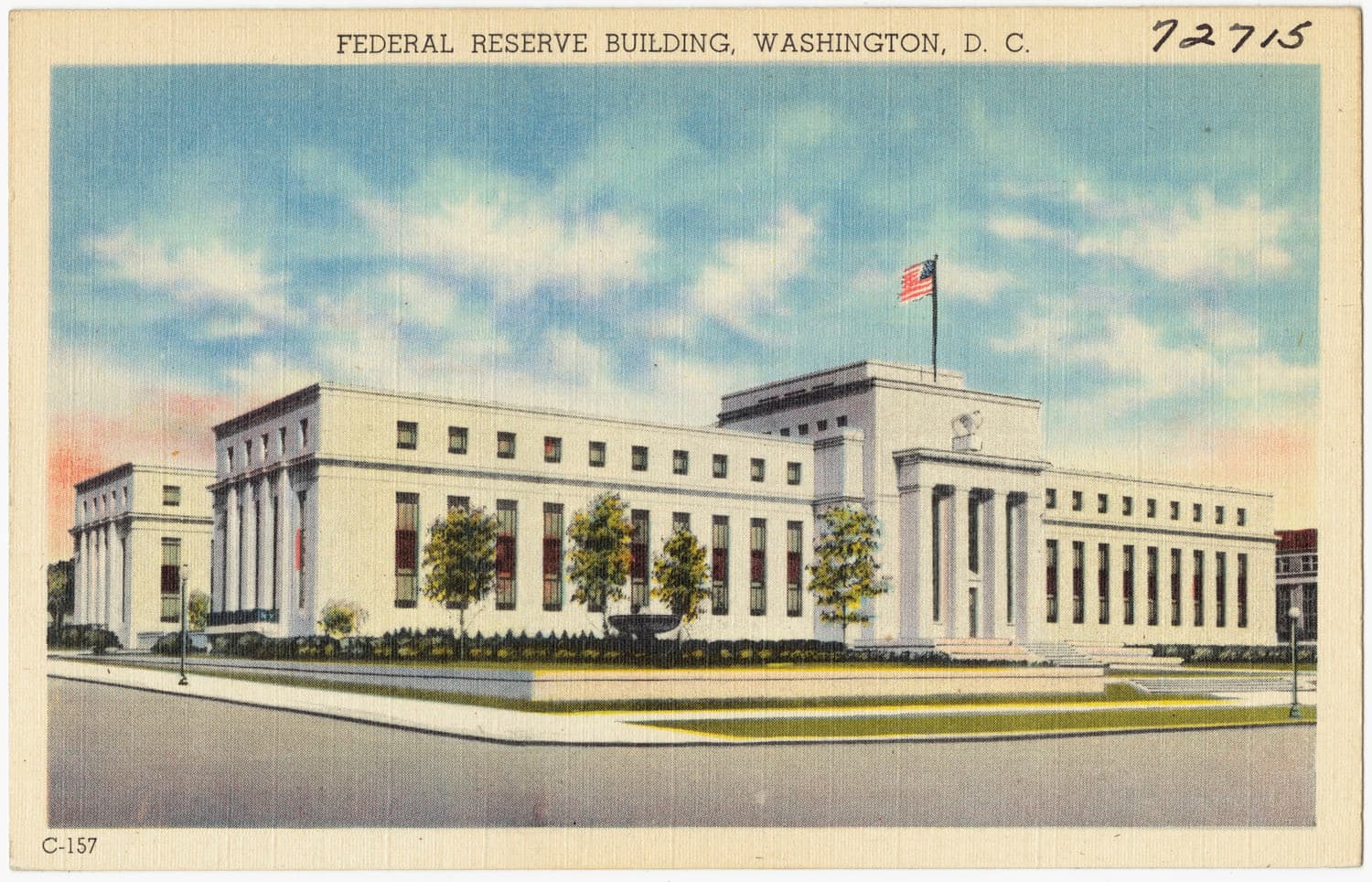
From the Federal Reserve's perspective, this level of private sector confidence in AI's future impact complicates the path forward for monetary policy. Chair Jerome Powell and the Federal Open Market Committee have consistently emphasized a data-dependent approach, with a keen eye on inflation and labor market conditions. While strong investment signals economic resilience, potentially allowing the Fed to maintain higher interest rates for a more extended period, the disinflationary potential of AI also cannot be ignored. The prospect of significant productivity gains could lower the neutral rate of interest over the long run, meaning the current policy rate might be more restrictive than implied by nominal figures. This creates a delicate balance for the Fed, navigating between managing near-term inflation and accounting for long-term structural shifts driven by technological advancement.
For fixed income investors, the implications are profound, touching on yield curve dynamics, credit spreads, and duration risk. A sustained period of high-growth AI investment could lead to a steeper yield curve if long-term inflation expectations are re-anchored higher due to anticipated economic expansion, or if the market prices in a higher natural rate of interest. Conversely, if the disinflationary productivity gains are priced in more aggressively, the curve could flatten as the terminal rate expectations come down. Credit spreads, particularly for high-yield technology companies and those poised to benefit from AI integration, could see further compression as risk appetite improves and default probabilities are perceived to decline. However, the duration risk remains elevated for long-dated bonds, as any upward revision in growth or inflation outlook could lead to significant capital losses, making active management of portfolio duration paramount in this environment.
Across asset classes, this robust signal of AI investment carries significant weight. Equities, particularly those in the technology sector, could see continued re-rating, though the market is likely to differentiate between companies that are true AI innovators and those merely riding the narrative wave. NVIDIA, for instance, saw a modest gain of 0.2 percent to $202.06, reflecting ongoing demand for its foundational AI hardware. In the cryptocurrency space, assets like Bitcoin and Ethereum often trade as proxies for risk appetite and technological innovation. Bitcoin, trading at $75,927, and Ethereum at $2,315, both saw positive movements of 1.7 percent and 1.2 percent respectively, suggesting that the broader market views significant AI investment as a bullish indicator for the digital asset ecosystem. Commodities, while less directly impacted, could see demand shifts as AI optimizes supply chains and energy consumption.
Looking ahead, the market will intently monitor upcoming macroeconomic data releases for further clarity on the interplay between technological advancement and monetary policy. Key inflation prints, such as the Consumer Price Index and Personal Consumption Expenditures, will be critical in shaping the Fed's narrative. Any commentary from Federal Reserve officials or other major central banks regarding the long-term impact of AI on productivity and inflation will also be heavily weighted by bond traders. Furthermore, earnings reports from major technology companies in the coming weeks will offer granular insights into the immediate capital expenditure and revenue generation stemming from AI initiatives, providing more data points for fixed income investors to model future economic scenarios.
The bottom line for Gokhshtein Media is clear: the reported $10 billion funding for Bezos's AI venture is not merely a tech story; it is a macro event with profound implications for fixed income markets. This substantial capital allocation signals an unwavering belief in AI's capacity to drive future economic growth and productivity, creating a complex backdrop for central banks. Investors must prepare for a landscape where the disinflationary potential of AI technology could clash with persistent demand-side inflationary pressures, keeping the yield curve in a state of flux and making duration management a critical determinant of portfolio performance. The era of AI-driven capital deployment has truly begun, and its effects on interest rates will be felt for years to come.