The United States economy now grapples with the sharpest fuel shock among G7 nations, a direct consequence of escalating geopolitical tensions following President Trump’s recent military actions in Iran. Energy prices, particularly at the pump, have surged dramatically, injecting a fresh wave of inflationary pressure across the consumer price index. This abrupt cost increase threatens to erode household purchasing power and significantly elevate operational expenses for U.S. businesses. The immediate impact registers as a critical challenge for policymakers, forcing a reassessment of the nation's economic resilience in the face of external shocks. This unprecedented rise in energy costs casts a long shadow over the Federal Reserve’s carefully calibrated monetary policy path.
Bond markets immediately reflected the inflationary shock, with the yield on the benchmark 10-year U.S. Treasury note climbing several basis points as investors priced in higher inflation expectations and a more hawkish Federal Reserve. Equity markets showed a mixed but cautious reaction, with the S&P 500 closing up 0.3 percent at $7,230 and the Nasdaq Composite gaining 0.9 percent to $25,114, primarily driven by resilience in large-cap technology names like Microsoft, which added 1.6 percent to $414.44. However, the Dow Jones Industrial Average registered a 0.3 percent decline to $49,499, indicating broader market apprehension, while the small-cap Russell 2000 managed a 0.5 percent gain, closing at $2,813, suggesting some investors sought domestic value plays. The U.S. Dollar Index strengthened against a basket of major currencies, a classic flight-to-safety response amidst global uncertainty and the prospect of higher U.S. rates. Gold, a traditional inflation hedge, also saw significant buying interest, with futures contracts moving higher as investors sought refuge from currency debasement fears.
This current energy crisis draws unsettling parallels to the oil shocks of the 1970s, though its geopolitical genesis is distinctly modern, rooted in direct military engagement rather than an embargo or cartel action. Unlike previous cycles where supply disruptions often stemmed from production cuts or natural disasters, the present surge is explicitly tied to a kinetic conflict, introducing an elevated layer of unpredictability and risk premium into global energy markets. Such a sharp, politically induced commodity price spike has not been witnessed with this immediacy since the early 2000s, when regional conflicts briefly rattled supply chains, but never with the same G7-wide discrepancy in domestic fuel costs. The structural shift in energy consumption and the globalized nature of supply chains mean the ripple effects of this shock will propagate through economies with a different velocity and intensity than in prior decades. This unique confluence of geopolitical risk and inflationary pressure presents a challenge that historical playbooks may only partially address.
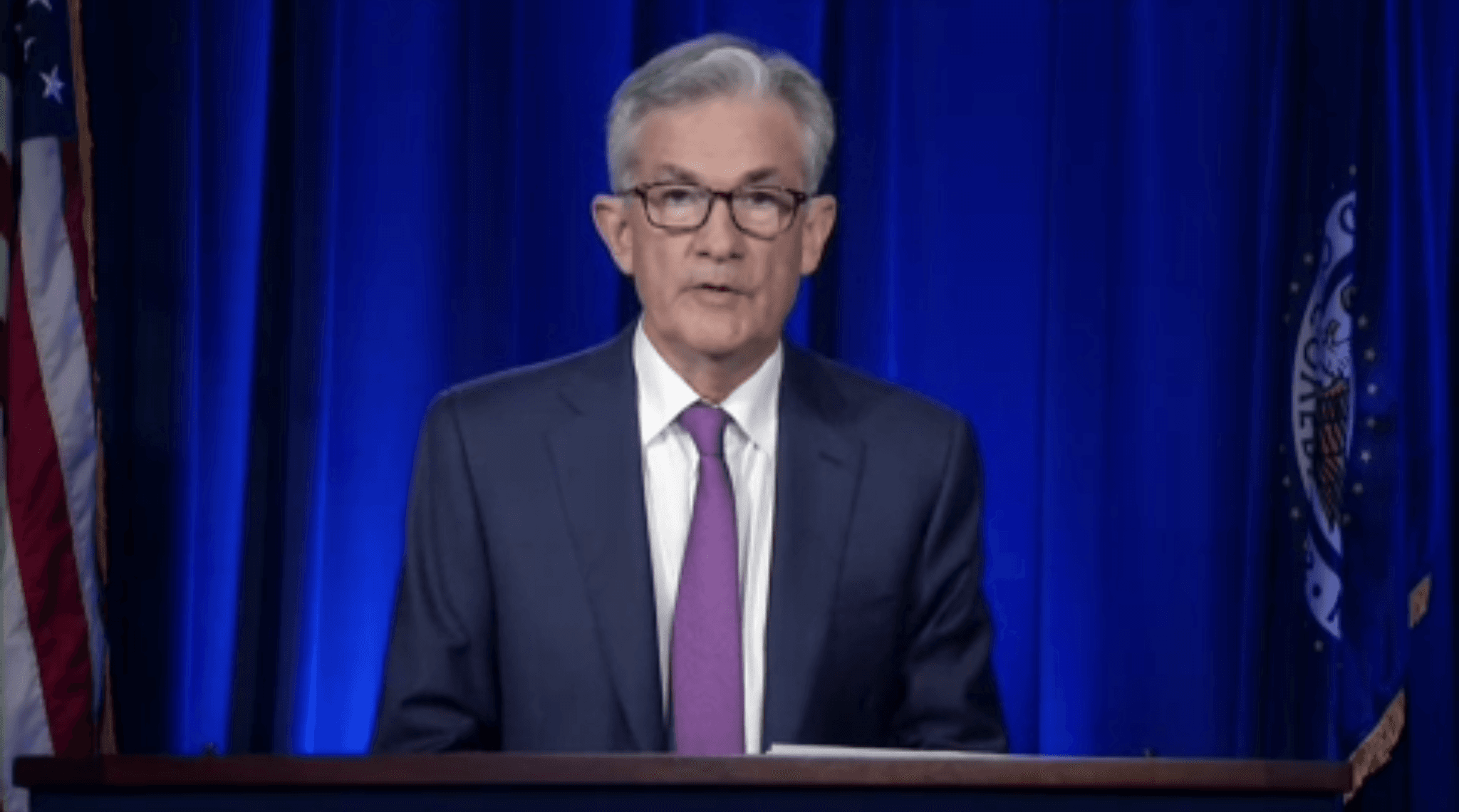
Federal Reserve Chair Jerome Powell now faces an exacerbated dilemma, balancing the imperative to contain inflation against the potential for economic deceleration triggered by higher energy costs. The Fed’s dual mandate of maximum employment and price stability becomes acutely strained, as aggressive rate hikes to curb inflation could inadvertently tip an already fragile economy into recession. While the European Central Bank and Bank of Japan also contend with global energy price increases, the U.S. situation is unique due to the direct involvement in the conflict and the localized intensity of the fuel shock. Central banks globally will likely maintain a hawkish bias, signaling that the era of cheap money remains firmly in the past, prioritizing inflation containment over growth at this critical juncture. Any pivot from the Fed’s current stance will hinge on the persistence of this energy inflation and its second-round effects on core price measures.
The fixed income complex is signaling an environment of heightened inflation risk and a more aggressive Federal Reserve, leading to significant shifts across the yield curve. We anticipate a persistent steepening pressure on the long end of the curve as investors demand a higher inflation premium for holding longer-duration assets, even as the front end remains anchored by expectations of more immediate rate hikes. Credit spreads are already showing signs of compression in higher-rated corporate bonds as investors seek quality, but we expect to see wider spreads in riskier, lower-rated segments as economic uncertainty mounts and default probabilities rise. Duration risk has become a paramount concern for bond portfolio managers, necessitating a strategic shortening of portfolio duration to mitigate losses from further yield increases. Institutional investors, including major asset managers like BlackRock and Vanguard, are actively rebalancing their fixed income allocations, favoring floating-rate notes and inflation-protected securities to navigate this volatile landscape.
Across asset classes, the fuel shock is creating a clear divergence in performance, rewarding sectors perceived as inflation beneficiaries while punishing those sensitive to consumer spending and higher input costs. Energy stocks, naturally, are outperforming, yet the broader equity market faces headwinds from reduced discretionary spending and increased operational expenses for businesses. Technology giants like Apple, which advanced 3.2 percent to $280.14, and Microsoft, up 1.6 percent to $414.44, showed some resilience today, but the broader market remains vulnerable to persistent inflation. In the cryptocurrency space, Bitcoin, trading at $78,138, and Ethereum, at $2,293, are navigating a complex narrative where they are sometimes viewed as inflation hedges but also remain sensitive to overall risk-off sentiment, reflected in the Crypto Fear & Greed Index registering 26, indicating ‘Fear’. Commodities, beyond crude oil, are experiencing upward pressure as supply chain disruptions and general inflationary expectations permeate markets, with gold continuing its upward trajectory as a safe-haven asset.
Looking ahead, the market’s focus will sharply pivot to forthcoming inflation data, particularly the May CPI and PCE reports, which will provide the first full measure of the fuel shock’s impact on broader consumer prices. Geopolitical developments in the Middle East, specifically the trajectory of President Trump’s engagement in Iran, will be the primary determinant of future energy price stability. Investors will closely scrutinize the Federal Reserve’s next FOMC meeting minutes for any indications of an accelerated tightening path or a shift in their inflation outlook. Scenario analysis suggests that continued escalation could push the U.S. economy into a stagflationary environment, while a swift de-escalation, though unlikely given current rhetoric, could offer some respite for bond yields. The global economic outlook remains highly sensitive to these intertwined energy and geopolitical risks, demanding constant re-evaluation of investment strategies.
Gokhshtein Media’s analysis concludes that the U.S. economy is entering a protracted period of elevated inflation and constrained growth, driven by an unprecedented geopolitical energy shock. The Federal Reserve now faces its most formidable challenge in decades, with limited room to maneuver without risking either entrenched inflation or a severe economic downturn. Fixed income investors must brace for continued volatility and a higher-for-longer rate environment, emphasizing active management and strategic duration adjustments. This confluence of war-driven energy costs and a hawkish central bank creates a complex macro landscape where traditional investment paradigms are being rigorously tested. The imperative for investors is clear: prioritize capital preservation, seek genuine inflation hedges, and remain agile in a market fundamentally reshaped by geopolitical realities.