The latest economic indicators from across Asia present a bifurcated narrative: sustained manufacturing resilience juxtaposed against an undeniable surge in input costs driven by geopolitical conflict. While specific Purchasing Managers' Index (PMI) figures from bellwether economies like China, Japan, and South Korea indicate an expansionary phase, signaling robust factory orders and production volumes, the underlying data reveals a sharp acceleration in producer prices. This dichotomy underscores a global economy grappling with persistent supply-side shocks, where the resilience of industrial output is being increasingly tested by inflationary forces originating from distant battlefields. The critical takeaway here is that while the engine of global supply chains continues to hum, the cost of fuel is rising dramatically, threatening margin compression for producers and ultimately, driving up consumer price inflation globally. This intricate balance demands a nuanced understanding from fixed-income participants, as the implications for monetary policy are profound.
Fixed income markets immediately priced in this inflationary undercurrent, with longer-dated sovereign bond yields ticking higher across the G10 complex. The U.S. 10-year Treasury yield, a global benchmark, saw a notable upward move as bond investors recalibrated inflation expectations, pushing term premia higher. Concurrently, the Dollar Index (DXY) firmed, reflecting its status as a haven amidst global uncertainty and the prospect of sticky inflation potentially prolonging higher U.S. rates. Equities, surprisingly, shrugged off some of these concerns today, with the S&P 500 rallying 2.9% to $6,529 and the Nasdaq surging 3.8% to $21,591, indicating that the "holds up" part of the Asian manufacturing story currently outweighs the "cracks" for risk appetite. Gold, a traditional inflation hedge, also caught a significant bid, signaling deep-seated investor anxiety regarding the purchasing power of fiat currencies in this environment.
This current inflationary environment, fueled by geopolitical conflict and robust demand, echoes the supply-side shocks of the 1970s, albeit with different structural underpinnings. Unlike the wage-price spirals of that era, today's inflation is largely driven by commodity scarcity and supply chain reconfigurations exacerbated by conflict, not just energy. However, the risk of second-round effects remains potent, as businesses pass on higher input costs to consumers, potentially embedding inflation expectations. We saw similar, albeit briefer, pressures during the post-COVID reopening and the initial Russia-Ukraine conflict, where energy and food prices spiked and then partially receded. The critical difference now is the broadened persistence and embedded nature of these price pressures, making them less transient and more structurally integrated into the global cost structure, challenging the "transitory" narratives that once dominated central bank discourse and forcing a re-evaluation of long-term inflation outlooks.
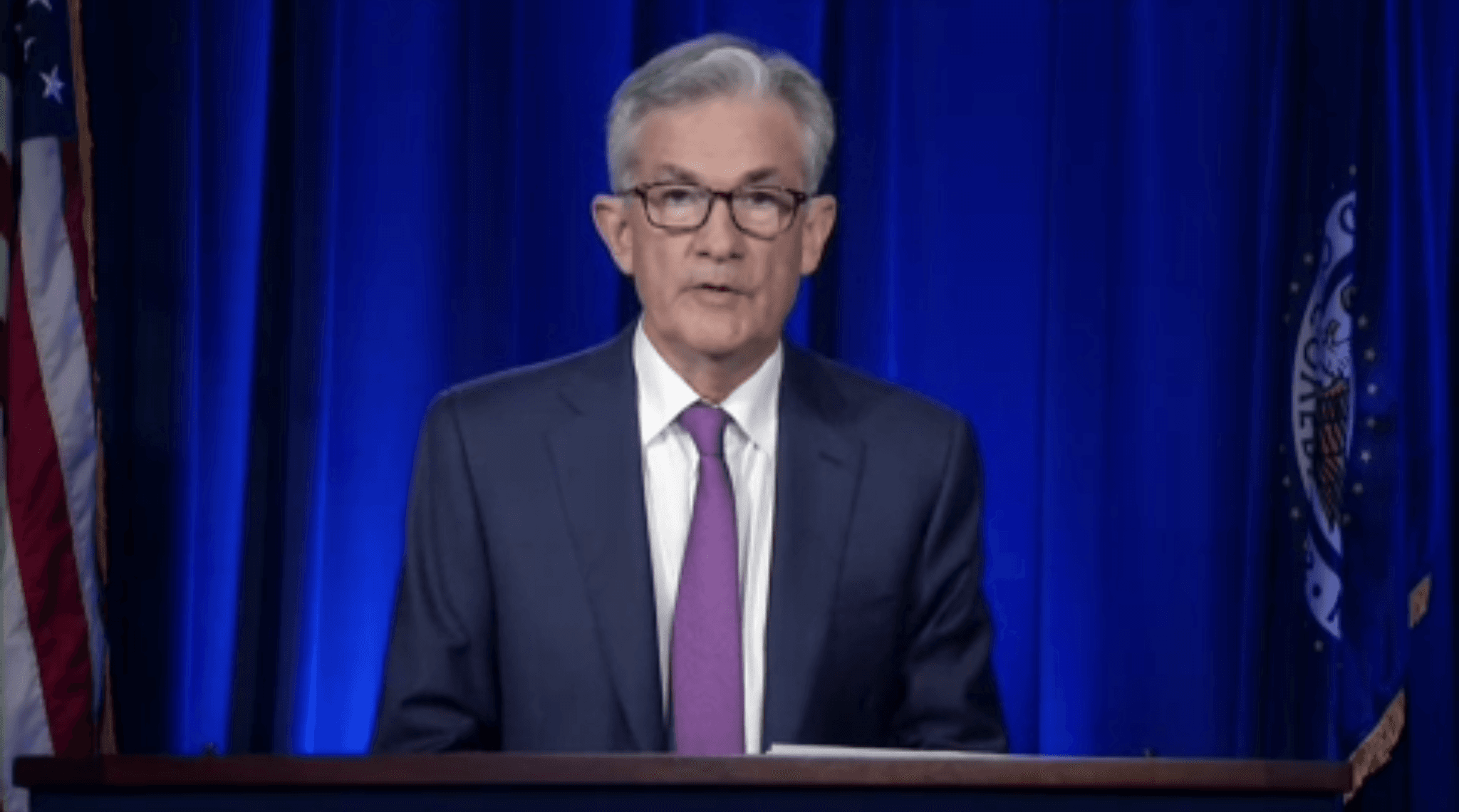
Federal Reserve Chair Jerome Powell, alongside his counterparts at the European Central Bank and Bank of Japan, faces an increasingly complex policy dilemma. The resilience in Asian manufacturing provides a global growth tailwind, supporting aggregate demand, but the war-induced price hikes present a clear and present danger to their inflation mandates. This dynamic significantly reduces the likelihood of aggressive rate cuts in the near term, pushing out expectations for monetary easing further into 2027 as central banks prioritize price stability. The Fed's dual mandate of maximum employment and price stability is under severe strain, as inflation stemming from external shocks cannot be easily tamed by demand-side tightening without risking a significant economic slowdown. We anticipate a continued data-dependent, cautious stance from these central banks, prioritizing inflation containment over growth stimulation if these price pressures persist and broaden.
From a fixed income perspective, the market is aggressively repricing duration risk. The "war lifts prices" narrative translates directly into higher inflation premia embedded in long-term bonds, leading to a steepening bias in the yield curve as the market anticipates central banks will eventually have to keep policy rates restrictive for longer, or even hike further, to tame inflation. Credit spreads, particularly for issuers heavily exposed to energy and raw material costs, are under pressure, reflecting increased operational risk and potential margin compression in an environment of constrained pricing power. Investment-grade corporate bonds, while generally resilient, face headwinds from higher funding costs, while high-yield segments could see spread widening if the "cracks" in the manufacturing story translate into broader economic weakness and increased default probabilities. Institutional investors are actively shortening duration and rigorously re-evaluating credit exposures, seeking refuge in floating-rate instruments and shorter-dated maturities to mitigate interest rate sensitivity.
The cross-asset implications are significant and multifaceted, creating a complex investment landscape. Equities, despite today's robust rally driven by tech giants like NVDA, up 5.6% to $174.40, and Meta, up 6.7% to $572.13, face a challenging environment where earnings growth could be eroded by rising input costs and higher discount rates. The Russell 2000, up 3.4% to $2,496, shows small-cap resilience, but this could be fleeting if credit conditions tighten further. Commodities, particularly energy and agricultural products, are set to remain elevated, offering a direct and effective hedge against inflation for diversified portfolios. For the digital asset space, currently exhibiting "Extreme Fear" with a Crypto Fear & Greed Index of 8, the narrative is complex; while Bitcoin at $67,741 and Ethereum at $2,092 have seen impressive institutional adoption via spot ETFs since their approval, persistent inflation and higher rates typically represent a drag on risk assets. However, a growing contingent of investors views these assets as a potential hedge against fiat debasement in a sustained inflationary regime, creating a push-pull dynamic where their uncorrelated nature is increasingly valued.
Looking ahead, market participants will be laser-focused on upcoming inflation prints, particularly core CPI and PPI data, to gauge the extent of price stickiness beyond energy and food. Central bank rhetoric from the Federal Reserve, ECB, and BOJ will be scrutinized for any shifts in their forward guidance, especially concerning the duration and magnitude of the "higher for longer" narrative. Geopolitical developments, particularly regarding the ongoing conflict and its impact on global supply chains, will remain a critical determinant of commodity price trajectories. We anticipate increased volatility across all asset classes as the market attempts to reconcile robust economic activity with escalating cost pressures, potentially leading to sharp corrections in overextended segments. Scenario analysis suggests a prolonged period of elevated inflation, pushing out the timeline for significant monetary easing well into 2027, with a non-trivial risk of a hard landing if central banks are forced into a more aggressive tightening cycle than currently priced.
Gokhshtein's take is unequivocal: The current macro landscape is defined by a delicate balance where Asia's manufacturing strength provides a crucial floor to global growth, but the inflationary pressures emanating from geopolitical conflict are increasingly undeniable and persistent. This is not a transient blip; it represents a structural shift in global supply and demand dynamics, forcing central banks to maintain a hawkish posture for longer than many market participants currently anticipate. Fixed income investors must continue to prioritize capital preservation through shorter duration and selective credit exposure, recognizing that the era of cheap money is firmly behind us. The "cracks" in the system, though not yet catastrophic, signal a higher-for-longer rate environment that will continue to reprice risk across the entire financial spectrum, challenging equity valuations and providing a mixed, but increasingly inflation-hedged, outlook for alternative assets like crypto.