The geopolitical landscape remains a critical determinant for the global rates complex, with recent rhetoric from President Trump regarding an Iran rescue operation injecting a fresh layer of uncertainty into an already fragile inflation outlook. While the daily drumbeat of CPI and employment figures typically captures the market's immediate attention, the long-term trajectory of the yield curve is increasingly sensitive to non-economic factors like foreign policy posturing and regional stability. Such events, even if not immediately manifesting in headline economic data, contribute to a higher geopolitical risk premium demanded by bondholders, particularly across longer-duration assets. This environment necessitates vigilant monitoring of potential energy price volatility and supply chain disruptions, both of which directly impact the Federal Reserve's dual mandate. Market participants, already navigating a complex path for future rate moves, must now contend with evolving geopolitical dynamics that carry significant implications for global capital flows and inflation expectations.
Despite the late timing of President Trump’s comments, the broader market session on April 5th reflected an underlying caution, visible in the mixed equity performance and the notable Crypto Fear & Greed Index reading of 12, signaling "Extreme Fear." While the Dow Jones edged down 0.1% to $46,505, the S&P 500 saw a modest gain of 0.1% to $6,583, and the Nasdaq climbed 0.2% to $21,879, suggesting a rotation within equity segments rather than broad-based conviction. Bitcoin, trading at $68,319, and Ethereum at $2,084, demonstrated resilience with 1.4% and 0.8% gains respectively, yet the broader crypto sentiment indicator points to significant underlying apprehension. The dollar index, while not explicitly provided, would typically firm in such environments as a safe-haven asset, reflecting a flight to quality that often accompanies heightened geopolitical tensions. Bond yields, though not detailed for the day, would likely face upward pressure on the longer end if inflation expectations are reignited by potential energy shocks, or experience a flattening bias if safe-haven demand dominates.
The current geopolitical backdrop, amplified by President Trump's assertive rhetoric, draws parallels to historical periods where Middle Eastern tensions significantly impacted global financial markets. From the oil shocks of the 1970s to more recent conflicts in the Persian Gulf, episodes of regional instability have consistently led to spikes in crude oil prices, which then feed directly into headline inflation figures and necessitate a hawkish stance from central banks. During such times, the fixed-income market typically experiences a flight to quality, driving down yields on benchmark U.S. Treasuries, particularly in the short end, while the longer end remains susceptible to inflation expectations. The nuanced reaction today, with equities showing mixed signals and crypto demonstrating unexpected strength amidst "Extreme Fear," underscores a market grappling with a complex interplay of traditional safe-haven flows and the evolving role of digital assets. This cycle presents unique challenges, as the global economy navigates post-pandemic supply chain recalibrations alongside persistent geopolitical flashpoints.
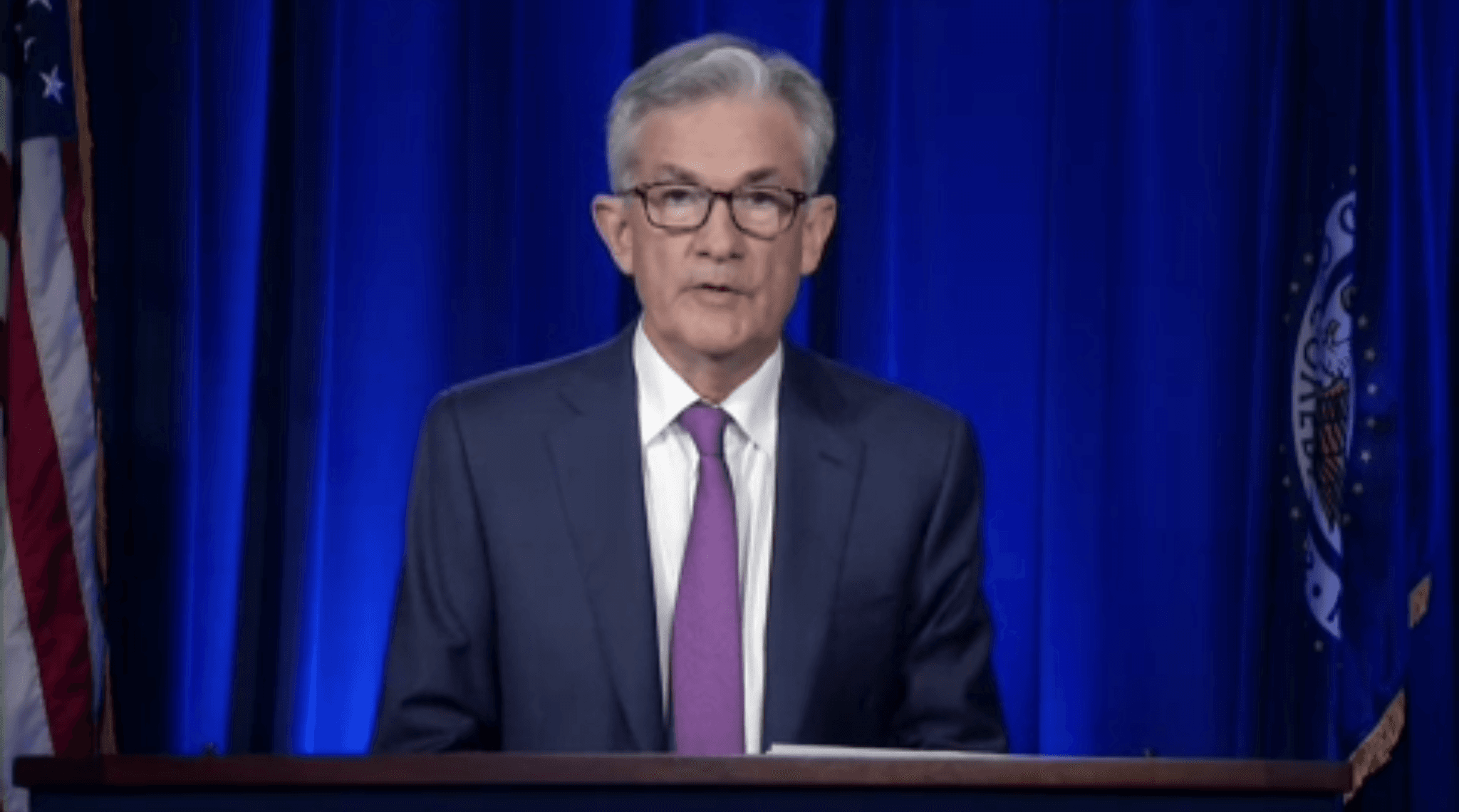
Federal Reserve Chair Jerome Powell and his counterparts at the European Central Bank and Bank of Japan face an increasingly intricate policy calculus, where geopolitical events like President Trump's recent comments cannot be easily dismissed as exogenous shocks. While central banks primarily focus on domestic inflation and employment data, significant geopolitical developments, particularly those involving key energy-producing regions, introduce considerable uncertainty into their forward guidance. An elevated geopolitical risk premium can translate into higher energy costs, potentially reigniting inflation just as central banks aim for a soft landing or consider easing monetary policy. Powell's data-dependent approach means any materialization of these risks, such as a sustained rise in crude oil prices, would force a re-evaluation of the neutral rate and the timing of any potential rate adjustments, potentially extending the period of restrictive policy. The emphasis remains on maintaining flexibility, but the margin for error narrows considerably when non-economic factors introduce such profound volatility.
For fixed-income investors, President Trump's rhetoric underscores the growing importance of geopolitical risk in shaping asset allocation decisions, particularly concerning duration and credit exposure. A sustained period of heightened geopolitical tension tends to steepen the yield curve if inflation expectations rise due to supply shocks, or flatten it if safe-haven demand for U.S. Treasuries dominates, compressing term premia. Credit spreads, particularly in emerging markets and high-yield corporate bonds, are highly susceptible to widening during periods of increased global uncertainty, as investors demand greater compensation for credit risk. The current environment, marked by an "Extreme Fear" sentiment in crypto despite overall market resilience, suggests a discerning approach to risk. Managing duration risk becomes paramount, as unexpected shifts in central bank policy, driven by external shocks, can lead to significant capital losses for portfolios overexposed to longer-dated fixed income instruments. Investors are actively de-risking, seeking shorter-duration assets or those with robust credit profiles to navigate the turbulent waters.
The ripple effects of heightened geopolitical risk, exacerbated by President Trump's recent statements, extend across all asset classes, necessitating a careful re-evaluation of correlation and diversification strategies. In equities, a flight to quality often translates into outperformance for defensive sectors and large-cap technology stocks like Microsoft, which gained 1.1% to $373.46, and Nvidia, up 0.9% to $177.39, as investors seek stability amidst uncertainty. Conversely, companies more sensitive to global trade and consumer sentiment, or those with significant international exposure, may face headwinds. For commodities, oil prices are the most immediate barometer of Middle Eastern stability, with any perceived threat to supply pushing prices higher, thereby fueling inflation. Gold typically shines as a traditional safe-haven asset, while the crypto market, despite its "Extreme Fear" reading of 12, saw Bitcoin and Ethereum hold steady, trading at $68,319 and $2,084 respectively. This suggests an evolving narrative where digital assets are increasingly viewed by some as an alternative hedge against systemic risk, even as broader sentiment remains cautious.
Looking ahead, the market's focus will remain acutely tuned to both traditional economic data releases and any further geopolitical developments emanating from the White House. Upcoming CPI and PCE inflation reports, alongside the next Federal Reserve Open Market Committee meeting, will provide crucial insights into the Fed's reaction function in an environment of elevated geopolitical risk. A scenario of escalating tensions in the Middle East, potentially leading to sustained higher energy prices, could force the Fed to maintain a restrictive stance for longer than currently priced by the futures market, challenging the consensus for eventual rate cuts. Conversely, a de-escalation could alleviate some inflationary pressures, allowing central banks more flexibility. Investors must also monitor the broader political discourse, as policy uncertainty stemming from domestic criticism of President Trump's rhetoric could further complicate the macro outlook, affecting everything from fiscal spending plans to regulatory stability under SEC Chair Paul Atkins.
Gokhshtein Media maintains that the current macro outlook is fundamentally shaped by the interplay of persistent inflation, restrictive monetary policy, and an increasingly volatile geopolitical landscape. President Trump's recent religious rhetoric regarding the Iran rescue operation serves as a stark reminder that non-economic factors can swiftly recalibrate risk premia and alter the trajectory of global rates. The bond market, accustomed to pricing in every nuance of economic data, must now more aggressively incorporate the unpredictable nature of foreign policy and its inflationary implications. We anticipate continued volatility across the yield curve, with a bias towards higher long-end yields if geopolitical risks translate into sustained energy price increases. Investors are advised to maintain a defensive posture, prioritize credit quality, and actively manage duration in portfolios, as the path to a stable inflation environment remains fraught with significant and often politically driven, external shocks.