NEW YORK — Today's market action reflects deep-seated apprehension across risk assets, particularly evident in the cryptocurrency space where the Crypto Fear & Greed Index plummeted to 15, indicating "Extreme Fear." This sentiment contrasts with more muted, albeit mixed, performance in traditional equity markets, suggesting investors are grappling with conflicting signals from economic data and central bank rhetoric. While no immediate Federal Reserve announcement triggered this shift, persistent inflation and robust labor market data continue to anchor expectations for a restrictive monetary policy stance longer than many initially projected. This anxiety stems from the bond market's steadfast refusal to fully price in aggressive rate cuts, a narrative that has defined the fixed-income landscape for months.
The bond market's reaction paints a clearer picture of institutional positioning. The 10-year U.S. Treasury yield, a key benchmark for global borrowing costs, remains elevated, reflecting the market's skepticism about the Fed's ability to pivot dovishly in the near term. The U.S. Dollar Index registered a modest gain, signaling a flight to safety and the greenback's enduring appeal during uncertainty. Equity markets presented a fragmented view: the S&P 500 dipped 0.1 percent to 6,817, and the Dow Jones Industrial Average slid 0.6 percent to 47,917, while the Nasdaq Composite edged up 0.4 percent to 22,903. This divergence suggests a rotation into growth-oriented tech names like NVDA, which gained 2.6 percent to $188.63, and Tesla, up one percent to $348.95, even as broader market indices struggled for direction. Gold, often a safe haven, showed minimal movement, indicating that while fear is present, it has not yet translated into broad-based panic.
This current environment echoes periods of late-cycle tightening or sustained hawkish policy, reminiscent of the early 2000s or even aspects of the post-Volcker era. Unlike cycles where inflation was clearly transitory or economic growth was unequivocally slowing, the present situation is characterized by a "sticky inflation" narrative that defies swift resolution. The market's initial optimism for a rapid series of rate cuts in late 2024 and early 2025 has largely evaporated, replaced by a grudging acceptance of a higher terminal rate for an extended period. This recalibration has forced investors to re-evaluate duration risk and credit exposure, a stark contrast to the easy money environment that fueled asset bubbles across various sectors just a few years prior. The current duration management challenge is arguably more complex than the simple "buy and hold" strategies that prevailed during the quantitative easing years.
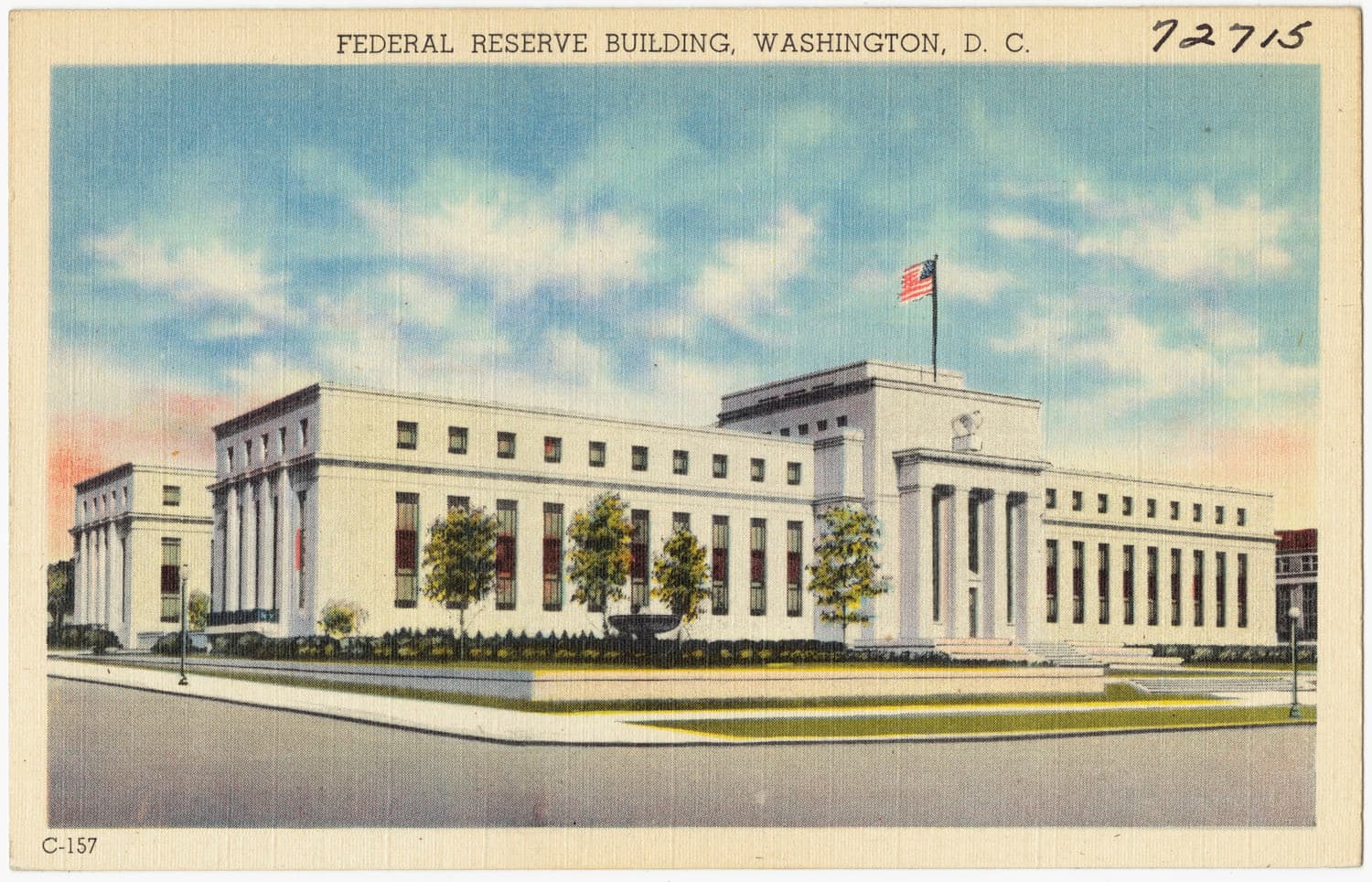
Federal Reserve Chair Jerome Powell and other members of the Federal Open Market Committee have consistently emphasized a data-dependent approach, signaling that while inflation has moderated from its peaks, it has not yet reached the two percent target sustainably. President Donald Trump has also voiced concerns regarding the economic trajectory, often advocating for policies aimed at stimulating growth while managing inflationary pressures. The Fed's latest minutes indicated a collective resolve to maintain restrictive policy until there is clear and convincing evidence that inflation is firmly on a downward path to target. This unwavering stance, despite some dissent, reinforces the bond market's current pricing of a limited probability of rate cuts in the immediate future. The central bank's commitment to price stability remains paramount, even if it means tolerating slower growth or increased market volatility.
The yield curve, particularly the spread between the two-year and 10-year U.S. Treasury notes, continues to exhibit a flattened profile, indicating market concerns about future economic growth even as short-term rates remain elevated due to Fed policy. While not deeply inverted, the lack of steepness signals that the market is not yet convinced of a strong, sustained economic expansion that would justify higher long-term yields. Credit spreads, especially in the investment-grade corporate bond market, have remained relatively tight, suggesting that default risk is not a primary concern for institutional investors like BlackRock or Vanguard. However, duration risk has become a central focus for fixed-income managers, who are actively adjusting portfolio sensitivities to interest rate changes. Funds like PIMCO and Fidelity are navigating this volatile landscape by selectively increasing exposure to shorter-duration assets or employing active hedging strategies to mitigate potential capital losses from rising yields.
The implications of this macro backdrop ripple across all asset classes. In equities, the tech-heavy Nasdaq's resilience, driven by gains in giants like Amazon (up two percent to $238.38) and Meta Platforms (up 0.2 percent to $629.86), suggests a flight to quality within the stock market, favoring companies with strong balance sheets and predictable cash flows. Conversely, the broader market indices, including the Russell 2000, which fell 0.2 percent to 2,631, signal underlying weakness in smaller, more economically sensitive companies. Cryptocurrencies, despite the "Extreme Fear" reading, showed modest gains, with Bitcoin trading at $72,952, up one percent, and Ethereum at $2,246, up 1.2 percent. This counterintuitive move could be attributed to a decoupling narrative, where some digital assets are seen as an alternative store of value or a speculative bet against traditional financial volatility, a trend that began after the approval of Bitcoin spot ETFs in Jan. 2024 and Ethereum spot ETFs in May 2024. However, the low Fear & Greed Index suggests this price action is not broadly supported by retail sentiment.
Investors are now keenly awaiting upcoming economic data releases, including the next Consumer Price Index report and the Personal Consumption Expenditures index, which the Federal Reserve closely monitors. These figures will be crucial in shaping expectations for the Fed's June and July meetings. Further insights will come from the minutes of the next FOMC meeting, scrutinizing any shifts in the committee's collective stance on inflation and growth. Scenario analysis for fixed-income portfolios continues to center on the probability of a "higher-for-longer" rate environment versus a potential, albeit delayed, easing cycle. Market participants are positioning for continued volatility, with derivatives markets reflecting a range of outcomes that extend well into 2027, highlighting the uncertainty surrounding the long-term path of monetary policy.
Gokhshtein Media maintains that the bond market's current posture, characterized by a flat yield curve and persistent duration risk, is the most accurate barometer of the economic reality. The "Extreme Fear" in crypto, juxtaposed with mixed equity performance, underscores a market grappling with a Federal Reserve committed to its inflation fight, even if it means stifling growth. Institutional capital remains highly sensitive to incoming data, with a strong bias toward preserving capital in an environment where the cost of money is not expected to decline significantly anytime soon. A genuine shift in central bank policy will require more than just anecdotal evidence; it demands a sustained and undeniable deceleration in core inflation, a condition not yet met.