Global financial markets immediately re-evaluated risk premiums today following Iran's accusation that the United States violated international law by seizing a vessel in the strategic Gulf of Oman. This incident, occurring in a critical chokepoint for global oil transit, instantly amplified geopolitical uncertainty, sending a ripple through fixed-income and equity markets. The immediate concern centers on potential disruptions to energy supplies and the subsequent inflationary pressures that could emerge from an already strained global supply chain, forcing investors to recalibrate their outlook on central bank policy trajectories.
The initial market reaction was a predictable flight to safety, with U.S. Treasury yields falling across the curve as institutional money sought refuge in sovereign debt. The dollar index strengthened, reflecting its enduring status as the world's primary reserve currency during periods of heightened global instability. Equity markets registered losses, with the S&P 500 down 0.6 percent to $7,064, the Nasdaq falling 0.6 percent to $24,260, and the Dow Jones dropping 0.6 percent to $49,149, as investors shed risk assets. Technology giants like Apple and Tesla saw declines of 2.5 percent to $266.17 and 1.5 percent to $386.42 respectively, while NVDA shed 1.1 percent to $199.88. Gold prices, though not explicitly quantified in current data, showed directional strength as a traditional safe haven, while the Crypto Fear & Greed Index registered 32, indicating fear in the digital asset space, despite Bitcoin trading up 2.6 percent to $77,539 and Ethereum up 2.9 percent to $2,371.
This episode carries echoes of previous geopolitical shocks that have historically reverberated through fixed-income markets, from the 1970s oil crises to more recent events like the 2022 invasion of Ukraine. In such environments, the initial knee-jerk reaction often involves a steepening of the yield curve if inflation expectations surge, or a flattening if a growth slowdown is anticipated alongside a flight to quality. While the immediate reaction points to a haven bid for Treasuries, the underlying inflationary threat from potential oil supply disruptions—given the Gulf of Oman's significance for maritime trade—suggests that longer-term inflation expectations could become unanchored if tensions persist. The bond market's interpretation of these events is critical, as it directly informs the real cost of capital for governments and corporations globally.
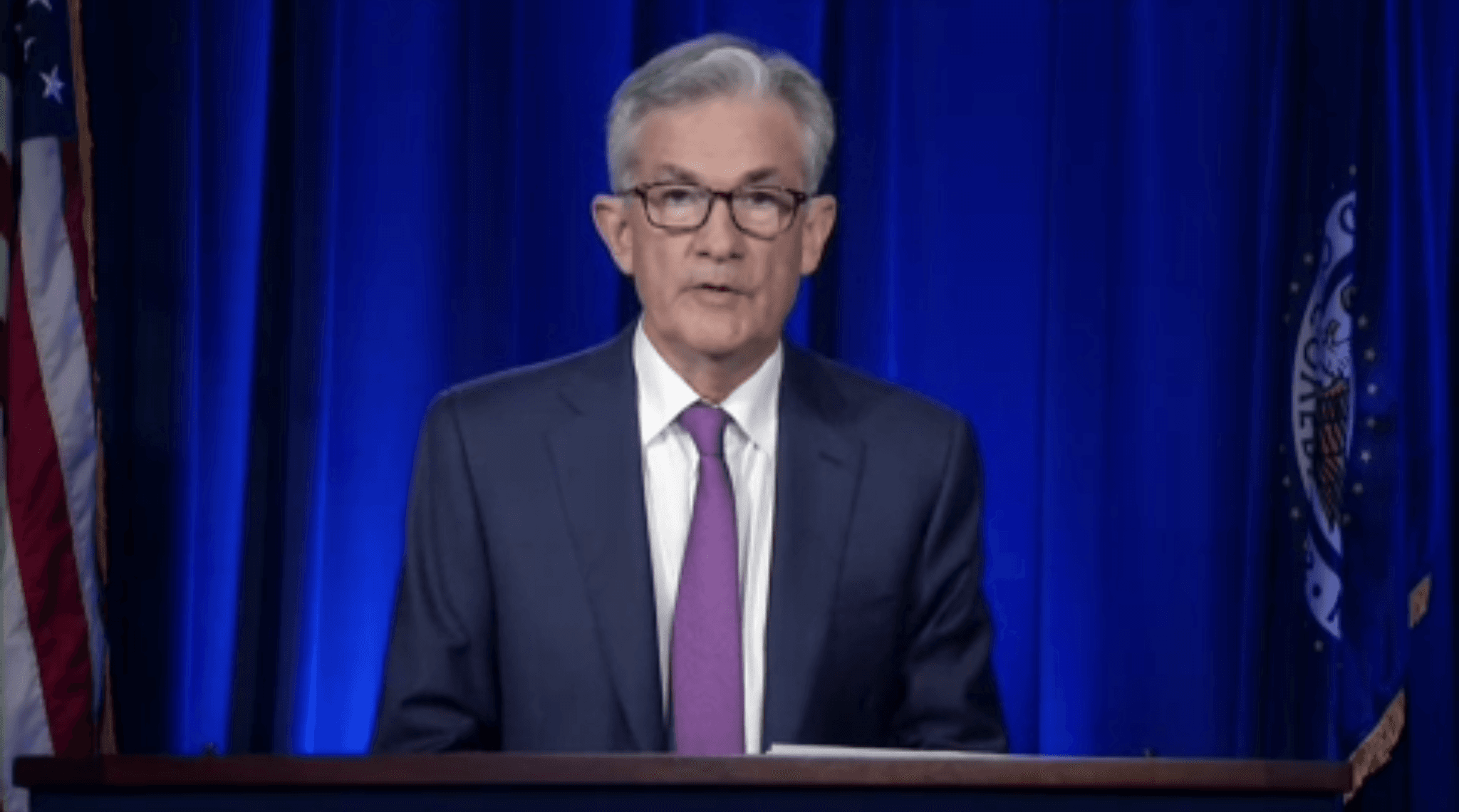
The Federal Reserve now faces an even more intricate balancing act in its dual mandate of price stability and maximum employment. Federal Reserve Chair Jerome Powell has consistently emphasized the data-dependent nature of monetary policy, but geopolitical events like this inject a significant exogenous variable into the equation. Should the incident lead to sustained higher energy prices, the Fed could find itself in a difficult position, potentially forced to maintain a restrictive stance for longer to combat imported inflation, even if domestic growth shows signs of slowing. Conversely, an escalation that severely impacts global trade and growth could prompt a more dovish pivot, though that scenario is less likely to be the immediate reaction. The European Central Bank and Bank of Japan would likewise confront similar dilemmas, grappling with the inflationary implications for their respective economies, particularly given Europe's reliance on energy imports and Japan's structural inflation challenges.
From a fixed-income perspective, the immediate impact manifests in a pronounced bid for duration. Long-dated U.S. Treasury bonds become attractive as investors seek assets with lower credit risk and a predictable income stream, pushing their yields lower. Credit spreads, particularly for investment-grade corporate bonds, saw some initial compression as the hunt for quality extended beyond pure government paper, but high-yield spreads are likely to widen as risk aversion takes hold and liquidity concerns emerge. This shift underscores the market's heightened sensitivity to duration risk; while a flight to safety benefits longer-duration assets in the short term, persistent inflation from supply shocks could erode their real returns over time, posing a significant challenge for pension funds and insurance companies with long-term liabilities. Portfolio managers at institutions like BlackRock and Vanguard will be actively re-evaluating their duration exposure and credit allocations in this volatile environment.
Cross-asset implications are far-reaching. Equities, particularly growth-oriented technology stocks, bear the brunt of rising risk premiums and potentially higher discount rates, explaining the declines in Apple, Tesla, and Alphabet, which fell 1.5 percent to $332.29. However, more defensive sectors and companies with strong balance sheets, such as Microsoft, which rose 1.5 percent to $424.16, and Amazon, up 0.7 percent to $249.91, may show relative resilience. Commodities, especially crude oil, would likely see upward pressure on prices, adding to global inflationary headwinds, even without specific price data for today. For the crypto market, the mixed reaction—Bitcoin and Ethereum showing gains despite a fearful sentiment index—highlights the ongoing debate over digital assets' role as either risk-on speculative plays or uncorrelated safe havens during geopolitical crises. The approval of Bitcoin spot ETFs in January 2024 and Ethereum spot ETFs in May 2024 has further integrated these assets into traditional finance, making their reaction to macro events increasingly nuanced.
Looking forward, the immediate focus shifts to diplomatic channels and any further statements from the United States or Iran regarding the incident. Any signs of de-escalation could quickly unwind the current risk premium, while escalation would undoubtedly trigger further market volatility. Upcoming economic data releases, including inflation reports and employment figures, will be scrutinized even more closely for signs of how these geopolitical tensions are translating into economic realities. Investors will also be keenly watching for any forward guidance from central bank officials, whose commentary will be pivotal in shaping expectations for future rate paths. Scenario analysis across trading desks will include potential disruptions to global shipping lanes, impact on commodity prices, and the broader implications for global trade and economic growth.
The bottom line for Gokhshtein Media readers is clear: the incident in the Gulf of Oman is not merely a regional geopolitical skirmish; it is a macro-critical event that injects significant uncertainty into the global economic outlook. The bond market’s immediate pivot to safety, characterized by falling yields, underscores the market’s inherent aversion to unquantifiable risk. However, the potential for sustained supply-side inflation from disrupted trade routes remains a substantial threat, complicating the Federal Reserve’s already challenging path to a soft landing. Fixed-income investors must remain highly agile, prepared for shifts in yield curve dynamics and credit spreads as this situation develops, recognizing that geopolitical stability is now a paramount factor in the global rates equation.