A contentious claim from Iran regarding the turning back of a U.S. warship from the Strait of Hormuz, swiftly denied by a U.S. official who refuted any missile strike, immediately tightened global risk sentiment on May 4. This incident, regardless of its precise details, underscores the persistent volatility in a critical chokepoint for global oil transit, directly impacting supply expectations and, by extension, inflation outlooks. The initial reports prompted an immediate, albeit tempered, flight to quality across bond markets as investors sought refuge from escalating uncertainty in the Middle East, a region already fraught with complex dynamics.
Markets reacted with predictable caution as the news filtered through trading desks. U.S. Treasury yields saw a modest decline on the longer end of the curve, reflecting the demand for safe-haven assets, while the dollar index strengthened against a basket of major currencies. Equity markets showed mixed performance, with the Dow Jones closing down 0.3 percent at $49,499, though the S&P 500 managed a 0.3 percent gain to $7,230 and the Nasdaq rallied 0.9 percent to $25,114 by day's close. Gold prices, a traditional haven, edged higher, signaling investors' increasing unease with the geopolitical landscape, even as specific commodity prices like crude oil exhibited more pronounced upward pressure, hinting at future inflationary headwinds.
Historically, any disruption or even the credible threat of disruption in the Strait of Hormuz has sent ripples through the global economy, primarily via energy markets. Past incidents, such as the tanker attacks in 2019 or the broader tensions during the 1980s Iran-Iraq War, consistently demonstrated how quickly geopolitical risk premiums manifest in oil prices and subsequently filter into broader inflation metrics. For fixed-income investors, these episodes are a stark reminder of the non-linear risks that can rapidly alter the trajectory of monetary policy expectations, often forcing central banks to contend with supply-side inflation shocks that are beyond their direct control.
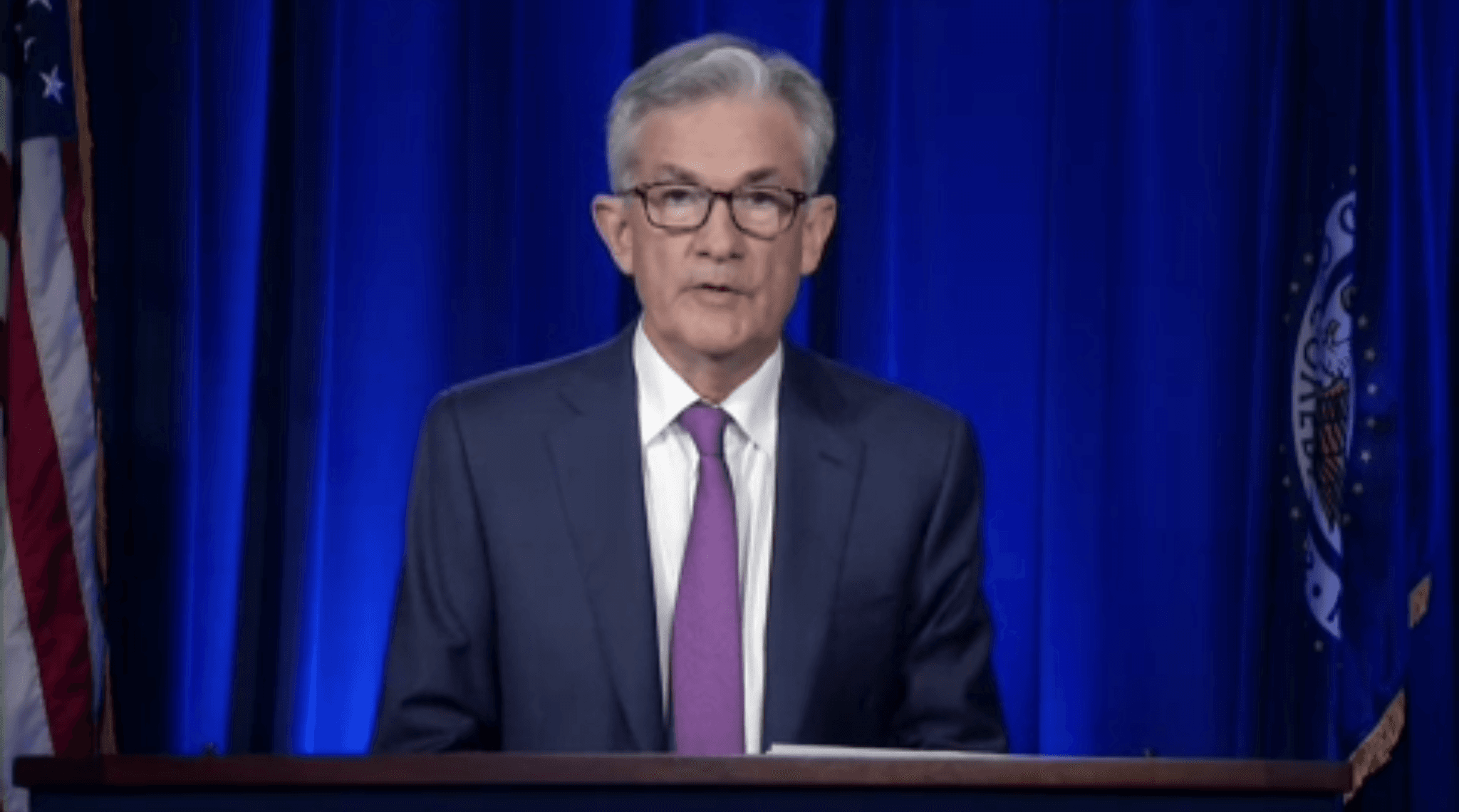
This renewed geopolitical friction presents a significant challenge for central banks, particularly the Federal Reserve, as it navigates a complex economic landscape. Federal Reserve Chair Jerome Powell has consistently reiterated the Fed's commitment to price stability, emphasizing data dependency in its approach to interest rates. A sustained rise in energy prices stemming from Middle East tensions would complicate the Fed's path to achieving its two percent inflation target, potentially delaying any anticipated rate cuts further into 2026 or even compelling a more hawkish stance if inflation proves more stubborn than current forecasts suggest. The Fed's dual mandate, balancing employment with price stability, becomes increasingly difficult when exogenous shocks threaten to ignite inflationary pressures.
For the bond market, this development unequivocally adds a geopolitical risk premium, impacting yield curve dynamics and duration risk. A sustained flight to quality could lead to further flattening of the U.S. Treasury yield curve, particularly if the short end remains anchored by the Federal Reserve's current policy stance while long-term yields decline on safe-haven flows. Institutional investors, including large pension funds and insurance companies holding substantial duration, must reassess their portfolio allocations, as the potential for renewed inflationary pressures could erode bond values if nominal yields rise to compensate for higher inflation expectations. Furthermore, credit spreads for corporate bonds, especially those in energy-intensive sectors or with significant international exposure, are likely to widen as investors demand greater compensation for increased perceived risk amidst global instability, challenging the spread compression seen in recent months.
The cross-asset implications are far-reaching, extending beyond traditional fixed income. Equities, while showing resilience today with the S&P 500 and Nasdaq posting gains, remain vulnerable to sustained geopolitical uncertainty and the prospect of higher energy costs weighing on corporate profits. Companies like Apple, trading at $280.25, and Tesla, at $390.82, could face headwinds from eroding consumer confidence and increased input costs if oil prices continue their upward trajectory. In the digital asset space, Bitcoin, currently at $78,788, and Ethereum, trading at $2,337, often correlate with broader risk assets, suggesting they could experience downward pressure if risk aversion intensifies. However, some market participants argue that Bitcoin could increasingly serve as a digital safe haven, though this thesis remains largely untested under prolonged, severe geopolitical stress.
Looking forward, the market's focus will remain acutely tuned to any further developments from the Strait of Hormuz, alongside upcoming economic data releases, particularly U.S. CPI and PCE figures, which will provide crucial insights into the inflation trajectory. Any escalation or de-escalation of tensions will dictate the immediate direction of energy prices and, consequently, global inflation expectations. Market participants will also closely scrutinize statements from Federal Reserve officials for any shifts in their forward guidance, as the central bank's reaction function to a potential supply-side inflation shock will be paramount in shaping the interest rate outlook for the remainder of 2026 and beyond.
The bottom line for Gokhshtein Media's macroeconomic outlook is clear: the geopolitical flashpoint in the Strait of Hormuz introduces an undeniable layer of complexity and risk to the global financial system. While the immediate market reaction has been measured, the potential for sustained energy price inflation and a more hawkish central bank response cannot be understated. Fixed-income investors must brace for increased volatility, a potential flattening of the yield curve, and widening credit spreads as the market prices in a higher geopolitical risk premium. This incident serves as a potent reminder that external shocks, often unpredictable, can swiftly override even the most meticulously constructed monetary policy narratives, demanding vigilance and dynamic portfolio adjustments from all market participants.