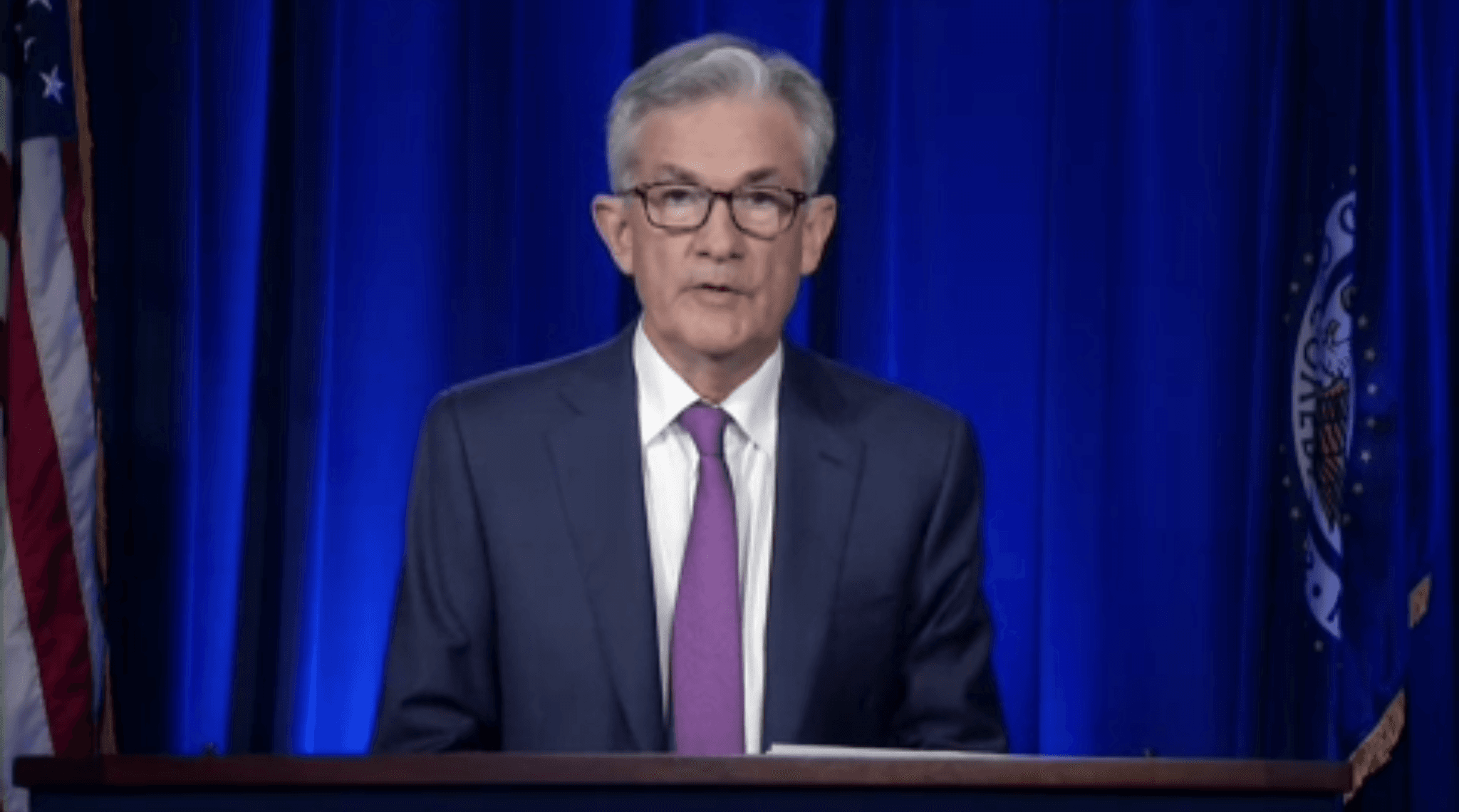
New York Fed President John Williams delivered a clear message to bond markets today, asserting that the Federal Reserve's current monetary policy framework is "well positioned" to address ongoing economic risks and uncertainties. His remarks underscore a steadfast commitment to the existing rate trajectory, suggesting that policymakers see little immediate need for significant adjustments despite evolving data. This stance implies a continued period of restrictive financial conditions, a critical signal for investors navigating the fixed-income landscape. Williams' assessment highlights the Fed's confidence in its ability to guide the economy toward its dual mandate goals without precipitous pivots. The central bank's patience remains a defining characteristic of its current operational strategy, prioritizing long-term stability over short-term market reactions.
Markets digested Williams' commentary with a degree of caution, reflecting the nuanced implications for various asset classes. U.S. Treasury yields, particularly on the shorter end of the curve, held firm as expectations for imminent rate cuts further receded. The two-year Treasury yield, a sensitive barometer of Fed policy, saw minimal movement, reinforcing the market's conviction that the Federal Open Market Committee (FOMC) will maintain its current target range for an extended period. The U.S. Dollar Index (DXY) exhibited modest strength, reflecting the relative attractiveness of dollar-denominated assets in a higher-rate environment compared to other major currencies. Equity markets, however, showed a negative reaction, with the Dow Jones shedding 1.1 percent to $48,942, the Nasdaq down 0.2 percent to $25,068, and the S&P 500 falling 0.4 percent to $7,201. This broad-based decline in stocks suggests investors are recalibrating valuations against a backdrop of sustained restrictive monetary policy, anticipating potential headwinds for corporate earnings.
Williams' assertion of "well positioned" policy evokes comparisons to previous cycles where the Fed adopted a patient, data-dependent approach, often after significant tightening campaigns. Historically, periods following aggressive rate hikes—such as those witnessed in 2022 and 2023—have been characterized by central bank vigilance against both resurgent inflation and undue economic contraction. Unlike the rapid pivots seen in response to the 2008 financial crisis or the abrupt easing during the COVID-19 pandemic, the current environment demands a more deliberate calibration. The ghost of the 1970s, where premature easing led to inflation re-acceleration, continues to loom large over policymaker discussions. This historical context suggests the Fed is determined to avoid a repeat of past errors, prioritizing a definitive return to stable prices even if it means prolonged economic drag.
From the broader central bank perspective, Williams' remarks align with Federal Reserve Chair Jerome Powell's consistent messaging regarding the need for "restrictive" policy to fully address inflation. The Fed's forward guidance has consistently emphasized a data-dependent path, with a clear bias towards ensuring price stability before considering any easing measures. While the European Central Bank (ECB) and the Bank of Japan (BOJ) face their own unique economic challenges, the underlying global theme remains one of cautious optimism regarding disinflationary trends coupled with a reluctance to declare victory prematurely. The Fed's current position, as articulated by Williams, suggests a collective central bank resolve to navigate lingering inflationary pressures, even as the global economy contends with geopolitical uncertainties and uneven growth trajectories across regions. This coordinated patience, or at least lack of aggressive divergence, is a critical factor for global capital flows.
For fixed-income veterans, Williams' commentary reinforces the expectation of a yield curve that remains either inverted or persistently flat for the foreseeable future. The "well positioned" narrative implies little impetus for a steepening of the curve driven by immediate rate cuts. Investors must contend with duration risk remaining elevated, as bond prices are more sensitive to interest rate changes when yields are low and maturities are long. Credit spreads, particularly in investment-grade and high-yield corporate bonds, have largely remained compressed, reflecting a market that still perceives low default risk and ample liquidity. However, any sustained weakness in equity markets or an unexpected economic deceleration could quickly widen these spreads, punishing complacent credit investors. The search for yield in this environment increasingly pushes capital into shorter-duration instruments or carefully selected credit exposures with robust balance sheets, as the prospect of significant capital appreciation from long-duration assets remains constrained.
The implications of sustained higher rates extend across the entire asset spectrum, shaping investment decisions from equities to digital assets and commodities. Equity markets, as evidenced by today's declines in the Dow, Nasdaq, and S&P 500, are highly sensitive to the cost of capital and future discount rates. Growth-oriented technology stocks, often reliant on future earnings potential, face particular scrutiny; Apple fell 1.2 percent to $276.83, while Microsoft was down 0.1 percent to $413.62, and Alphabet dipped 0.6 percent to $383.25. Conversely, Amazon rallied 1.4 percent to $272.05, and Tesla gained 0.4 percent to $392.51, showcasing idiosyncratic sector strengths. For digital assets, Bitcoin at $80,327 and Ethereum at $2,361, both showing modest gains today, continue to navigate this macro backdrop. While the approval of Bitcoin spot ETFs in January 2024 and Ethereum spot ETFs in May 2024 has introduced new institutional liquidity, the broader "higher for longer" narrative can temper speculative enthusiasm by raising the opportunity cost of holding non-yielding assets. Commodities, particularly gold, often benefit from inflation hedges but can face headwinds from a stronger dollar and rising real yields.
Looking ahead, the market's focus will pivot to upcoming economic data releases, which will either validate or challenge Williams' assertion of policy adequacy. Key inflation metrics, including the next Consumer Price Index (CPI) and Personal Consumption Expenditures (PCE) reports, will be scrutinized for signs of persistent price pressures or a definitive disinflationary trend. Labor market data, particularly nonfarm payrolls and wage growth, will offer crucial insights into economic resilience. Upcoming FOMC meetings will provide further clarity on the Fed's reaction function, with every nuance of Chair Powell's press conferences and the Committee's statements parsed for shifts in sentiment. Scenario analysis suggests that a significant upside surprise in inflation could force the Fed's hand towards further tightening, while a sharp downturn in employment could accelerate calls for easing. The current "well positioned" stance hinges on a continued, albeit gradual, path towards the Fed's two percent inflation target without undue economic dislocation.
The bottom line from Gokhshtein Media is clear: the Federal Reserve, as articulated by President Williams, is signaling an extended period of policy stability, prioritizing the complete subjugation of inflation above all else. This commitment creates a challenging environment for long-duration fixed income, where capital appreciation remains constrained, and duration risk is paramount. Equity investors must recalibrate valuations to account for a higher cost of capital and potentially slower growth. While pockets of strength exist, the overarching macro narrative points to a continued grind higher in real yields, making discerning asset allocation more critical than ever. The market should not anticipate a quick pivot; the Fed intends to remain "well positioned" until the data unequivocally dictates otherwise, demanding patience and strategic positioning from all institutional participants.