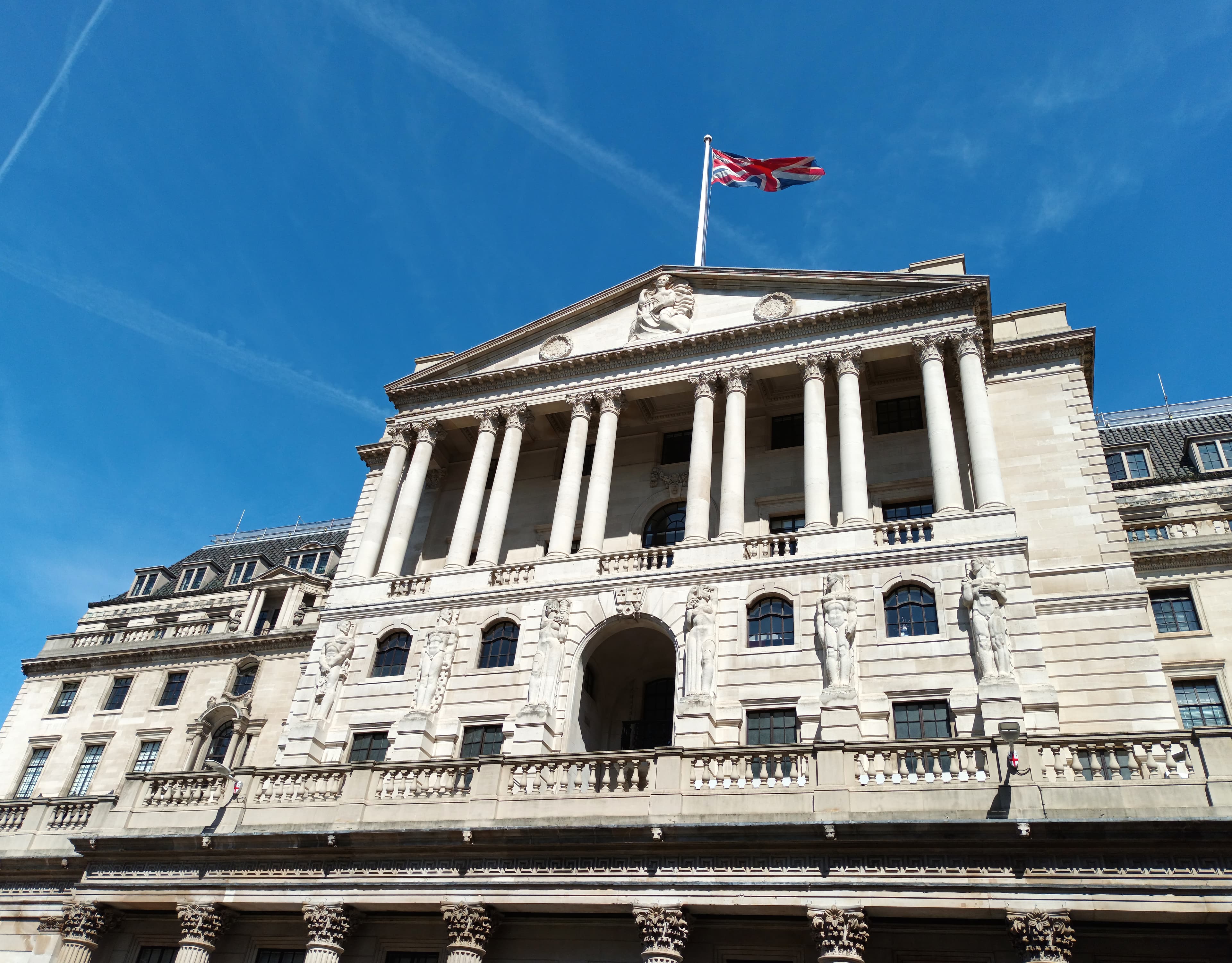
The Bank of England held its key interest rate at 3.75 percent Thursday, a decision economists widely anticipated. But the Monetary Policy Committee's pointed warnings about persistent upside inflation risks—signaling a hawkish bias despite the hold—hit U.S. equity markets hard. The S&P 500 dropped 1.5 percent to 7,316 and the Nasdaq fell 1.7 percent to 24,443. Investors are reading the BoE's stance as confirmation that sticky global inflation isn't going away, and that pressure directly challenges the valuation models for growth-oriented U.S. stocks.
Higher-for-longer global rates compress multiples for companies reliant on future earnings growth, and the market made that math visible Thursday. Nvidia dropped 3.6 percent to $190.01—a sharp reminder that AI enthusiasm doesn't insulate the stock from rate-driven multiple contraction. Tesla fell 3.0 percent to $298.32, reflecting its well-documented sensitivity to consumer financing costs and discretionary spending. Both moves confirm a risk-off rotation out of high-beta names as analysts revise discounted cash flow models under a more restrictive rate environment.
Even large-cap tech wasn't spared. Apple dipped 0.6 percent to $338.19 and Microsoft fell 0.7 percent to $390.54. Amazon dropped 1.8 percent to $226.65, a signal that rate concerns are reaching into cloud and e-commerce growth assumptions. Alphabet was the lone bright spot, gaining 0.9 percent to $336.71—likely a flight to relative quality given its strong advertising revenue and lower sensitivity to speculative growth narratives.
The rate-sensitive Russell 2000 fell 1.6 percent to 2,906, reflecting broad pressure on smaller companies that depend on cheap capital access. The Dow Jones Industrial Average declined 2.2 percent to 51,594, showing that today's selloff extended well beyond growth stocks. In this environment, free cash flow generation and balance sheet strength matter more than ever. Investors should weight demonstrated profitability over speculative growth narratives until global inflation risks show sustained moderation.


