Today's market tells a story of stark divergence. While the Nasdaq surged 1.0 percent to $25,374, propelled by AI bellwethers—Microsoft at $464.72 (+3.0 percent), Alphabet at $356.13 (+6.7 percent), Amazon at $271.58 (+15.3 percent) and Meta at $556.71 (+3.3 percent)—the underlying costs of the AI revolution are escalating at a pace the market has not yet priced in. That surge in Big Tech valuations, alongside NVDA's 2.9 percent gain to $200.75, masks a perilous paradox where market optimism collides with ballooning infrastructure expenses and high-profile speculative failures. Even as the Dow Jones rallied 0.5 percent to $52,485, reflecting broader sentiment driven by President Trump's recent policy reversals—including the reinstatement of targeted tariffs and continued corporate tax cuts—the Russell 2000 dipped 0.5 percent to $2,931, signaling a cautious, segmented market. The smaller companies comprising the Russell are more sensitive to rising labor costs and potential interest rate hikes, lacking the diversified revenue streams and global reach of their mega-cap counterparts.
The relentless pursuit of AI dominance has triggered a capital expenditure arms race across the technology sector. Dwindling cash reserves and soaring memory costs now define the AI buildout, directly impacting the balance sheets of the very companies whose stocks are surging. Alphabet and Microsoft each reported over $40 billion in capital expenditures for 2023-2024, with projections for 2025-2026 suggesting these figures could rise 20 to 30 percent year-over-year. Securing cutting-edge GPUs and developing proprietary AI chips demands multi-billion-dollar investments annually from giants—a cost that fuels NVDA's continued ascent while threatening to compress future profit margins. High Bandwidth Memory modules, particularly HBM3 and HBM4, are critical for AI accelerators, with manufacturers SK Hynix and Samsung struggling to meet demand and driving prices up more than 50 percent in the last year. TSMC's advanced packaging capacity, specifically its CoWoS technology, remains a significant bottleneck, with lead times extending to 12 to 18 months. This economic reality creates tension between the market's aggressive forward-looking valuations and the immediate financial burden of AI infrastructure, while simultaneously stifling smaller AI startups that cannot afford access to critical compute resources.
The speculative frenzy surrounding AI has also produced spectacular failures. Leopold Aschenbrenner's $45 billion AI hedge fund reportedly lost the majority of its capital in a matter of days, serving as a stark warning against unchecked exuberance. The fund reportedly made highly concentrated, leveraged bets on the rapid commercialization of Artificial General Intelligence within a short timeframe and on the specific performance trajectories of nascent foundation models that failed to meet aggressive benchmarks. This implosion exposes the volatility and concentration risk in highly specialized AI investment vehicles, where rapid technological shifts or misjudged market dynamics can erase value overnight. The episode echoes the dot-com bust of 2000-2001, when companies like Webvan—which raised over $800 million—went bankrupt within 18 months, and Pets.com burned through $300 million before collapsing. The difference between the steady, diversified growth of incumbent tech giants and the precarious nature of pure-play AI speculation is now concrete, prompting venture capitalists to demand clearer paths to profitability from AI startups.
Regulatory scrutiny adds another layer of cost to the AI landscape. U.S. lawmakers recently requested information from DoorDash regarding its use of Chinese AI models, signaling governmental concern over data sovereignty, national security and potential foreign influence in critical technologies. Sen. Mark Warner (D-Va.) and Sen. Marco Rubio (R-Fla.) have pushed for increased scrutiny on foreign technology influence, with legislative proposals targeting data localization requirements and audits of AI models developed by entities tied to adversarial nations. Trump's administration, with its protectionist stance, will likely intensify oversight on AI supply chains and data handling practices, potentially expanding the Commerce Department's Entity List to include more AI firms suspected of aiding military modernization. This mirrors U.S. actions against Huawei, initiated in 2019, which crippled its smartphone business by curtailing access to U.S. chip technology. The result is significant compliance costs and operational hurdles for companies globally, forcing a re-evaluation of international partnerships and technology sourcing and driving a trend toward technological decoupling.
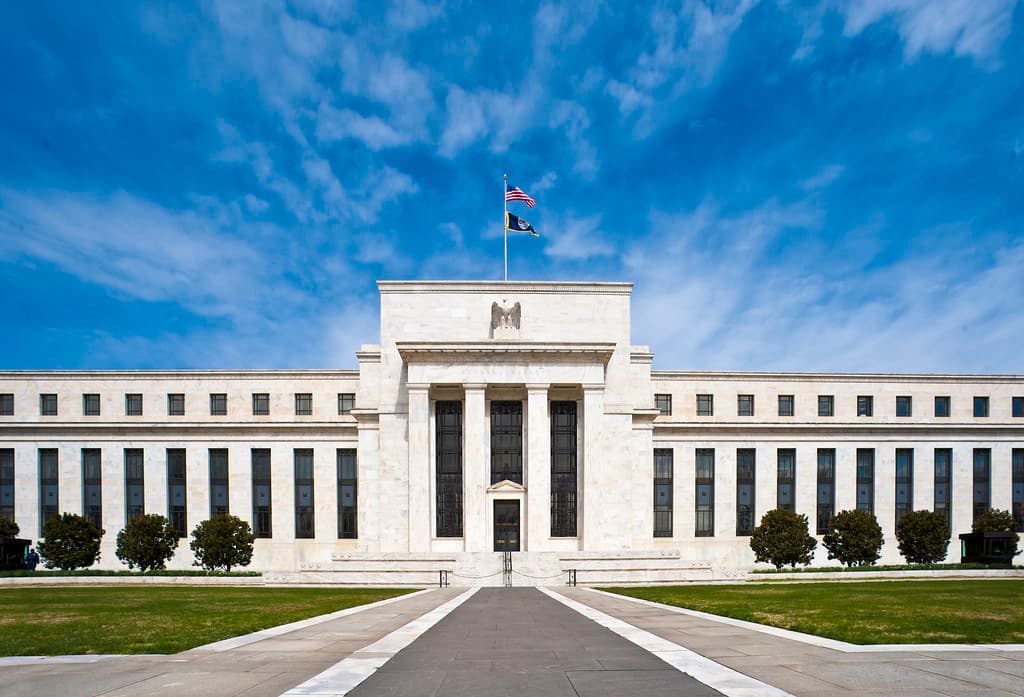
Kevin Warsh, the new Federal Reserve chair, faces an economy where the cost of capital directly determines whether these massive AI investments remain viable. Warsh, known for his hawkish stance on inflation and advocacy for fiscal discipline, is expected to prioritize price stability over accommodating capital-intensive growth. While the S&P 500 advanced 0.7 percent to $7,490, demand for cheap funding for AI buildouts remains large, with companies increasingly relying on debt issuance to finance their capital expenditures. Any hawkish signals from the Fed could tighten liquidity, making multi-billion-dollar infrastructure expenditures more burdensome and potentially slowing the pace of innovation. Apple's 7.4 percent decline to $308.91—diverging sharply from its Big Tech peers—illustrates that even market leaders face distinct pressures in this capital-intensive environment. Apple's revenue growth has decelerated, its Vision Pro headset has yet to yield substantial returns, and it faces antitrust pressure globally, including a recent $2 billion fine from the EU. Unlike Microsoft or Alphabet, Apple has not articulated a clear, immediate AI monetization strategy that justifies equivalent valuation multiples, leaving it vulnerable to capital rotation in a high-interest-rate environment.
The digital asset market offers a contrast in regulatory maturation yet faces its own challenges. Bitcoin trades at $62,622, down 0.7 percent over 24 hours, with Ethereum at $1,841, down 0.8 percent, alongside a Crypto Fear & Greed Index registering 28 (Fear). This cautious sentiment persists despite the successful operation of Bitcoin spot ETFs, approved Jan. 2024, and Ethereum spot ETFs, approved May 2024, for over two years, indicating increasing institutional integration. The GENIUS Act, signed in 2025, established a clear federal framework for payment stablecoins, mandating federal licensing and prudential standards, requiring full 1:1 backing with highly liquid assets and regular attestations—offering regulatory certainty for a critical segment of the crypto economy. Hyperliquid, a purpose-built Layer 1 for on-chain perpetual futures with its HYPE token launched Nov. 29, 2024, demonstrates high-performance decentralized infrastructure, achieving transaction speeds and finality comparable to traditional financial exchanges by processing millions of orders per second. That addresses latency and throughput limitations within a more defined regulatory environment, even as the SEC under Chair Gary Gensler continues to classify many altcoins as unregistered securities, creating ongoing uncertainty for the broader market.
The sustainability of current valuations hinges on the industry's ability to translate AI potential into profitable outcomes, rather than simply accumulating expensive, underutilized compute. Microsoft's Q3 2026 earnings report will deliver critical data on cloud infrastructure spend, AI-specific revenue growth, gross margins for AI services and—crucially—the utilization rates of its vast GPU clusters. A low utilization rate signals overspending relative to demand and hits profitability directly. Any executive orders or legislative actions from Trump's White House on AI data sovereignty or supply chain security—including potential mandates for domestic sourcing of AI chip fabrication or restrictions on data center locations—would reshape industry operating models fast. The next Federal Open Market Committee meeting under Warsh carries equivalent weight: a rate signal hawkish enough to echo the Fed's early-2000s tightening cycle could reprice the entire AI capital stack. The Nasdaq's ability to hold above 25,000 will mark whether investor confidence survives the collision between AI's promise and its price tag.