The momentum trade recently delivered sharp profit-and-loss swings, a direct warning to investors who failed to hedge or diversify. That volatility is compounded by growing inflation risks, challenging the assumption that market dips reliably offer buying opportunities.
Contrarian analysis points to a counterintuitive vulnerability: the more investors believe buying the dip always works, the more likely a major decline becomes. Widespread conviction in an automatic rebound is itself a structural risk—when Wall Street converges on a single recovery thesis, the trade becomes crowded and fragile.
Stretched valuations, rising interest rates and economic uncertainty are eroding the conditions required for quick recoveries. These factors do not move independently; each tightens the margin for error when prices correct.
The warning signs are specific. Market breadth is weakening, and buyer exhaustion is visible in technology stocks. The Nasdaq rose 1.0 percent to 25,374 today, but individual components diverged sharply—Apple dropped 7.4 percent to $308.91, illustrating selective pressure within the sector rather than broad-based strength.
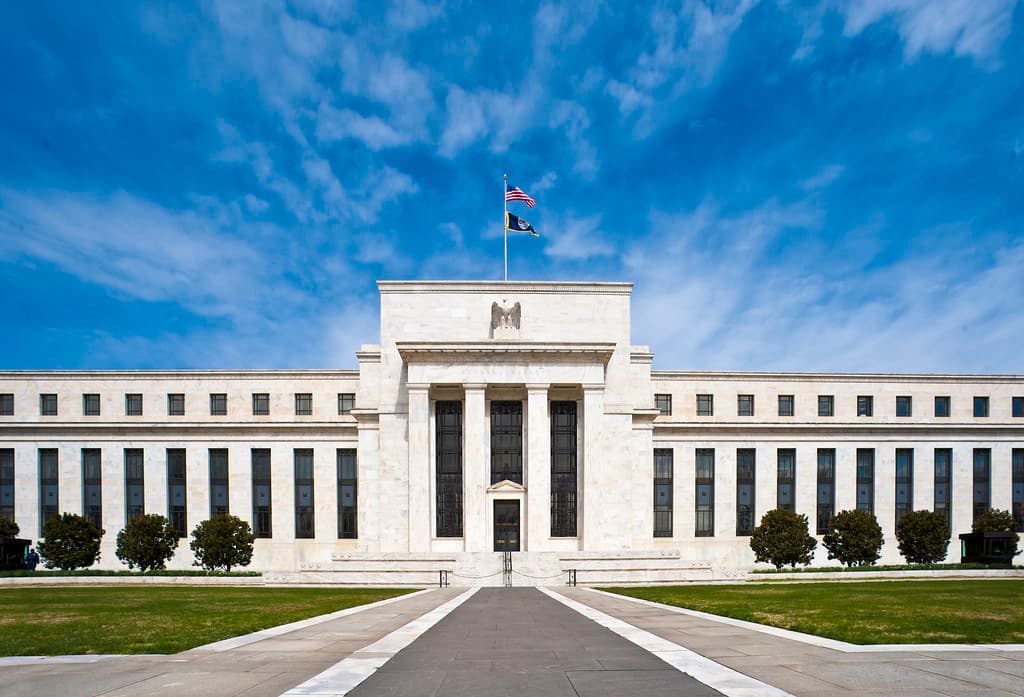
Inflation remains the primary constraint on Federal Reserve flexibility. Under Chair Kevin Warsh, the Fed has maintained a data-dependent stance. Persistent inflation could force higher-for-longer rates, raising financing costs for corporations and consumers and limiting the policy response available if markets deteriorate.
The marginal-buyer problem is the critical structural question: who steps in if prices fall another 5 to 10 percent? The absence of committed liquidity at lower price points could convert a routine dip into a sustained decline, particularly if sentiment shifts away from immediate recovery expectations.
A historic warning signal, known as the "Total Conviction" signal, recently triggered for a company roughly one-hundredth the size of Nvidia—suggesting risk is building beyond the largest, most visible market leaders. Nvidia itself gained 2.9 percent to $200.75.
Today's index-level performance obscures the divergence. The S&P 500 rose 0.7 percent to 7,490 and the Dow Jones Industrial Average gained 0.5 percent to 52,485. The Russell 2000, representing smaller-capitalization stocks, fell 0.5 percent to 2,931—a split that undermines any reading of broad market strength.